
Episode 86: Increase Bone Density in Under 10 Seconds a Week? - Kyle Zagrodzky
By Joshua Roberts - Updated on 18th March 2026
This episode was sponsored by Monk! Use discount code PEMFPOD for 10% off your first order!
This episode was sponsored by Stemregen! Use discount code PEMFPOD for 20% off your next order!

In this episode of The PEMF Podcast, Andy sits down with Kyle Zagrodzky, founder of OsteoStrong, a global franchise with more than 200 locations focused on improving bone density and skeletal strength.
Kyle explains the science behind OsteoStrong and how the system is designed to stimulate bone growth through what they call functional bone performance. Based on Wolff’s Law, the principle that bones adapt and become stronger when exposed to sufficient force, OsteoStrong aims to trigger osteogenesis without the impact normally required from activities like jumping or sprinting. Sessions are short, typically 10–15 minutes once per week, and involve a series of specialised machines that allow participants to generate very high levels of force in a safe, static environment.
The conversation explores the importance of bone density for longevity, mobility and metabolic health, as well as how technologies like PEMF, red light therapy and other biohacking tools are being integrated into OsteoStrong centres. We also discuss common myths about bone loss, why bone health should start much earlier than most people think, and the growing role skeletal strength may play in overall health and performance.
Key Points
• What OsteoStrong is and how the system works
• The science behind Wolff’s Law and bone adaptation
• Why only 10–15 minutes once per week may be enough to stimulate bone growth
• The force threshold needed to trigger osteogenesis
• Why bone loss is not simply an inevitable part of aging
• Case studies showing improvements in bone density and strength
• The link between balance, skeletal strength and longevity
• Research exploring connections between bone health and metabolic function
• How PEMF and other technologies are used alongside OsteoStrong
• Why bone density may be one of the most overlooked factors in long-term health
About us
We’ve spent over a decade specialising in PEMF therapy, it’s not just part of what we do, it’s all we do. Our mission is to make PEMF accessible and understandable through honest education, transparent comparisons, and independent insights.
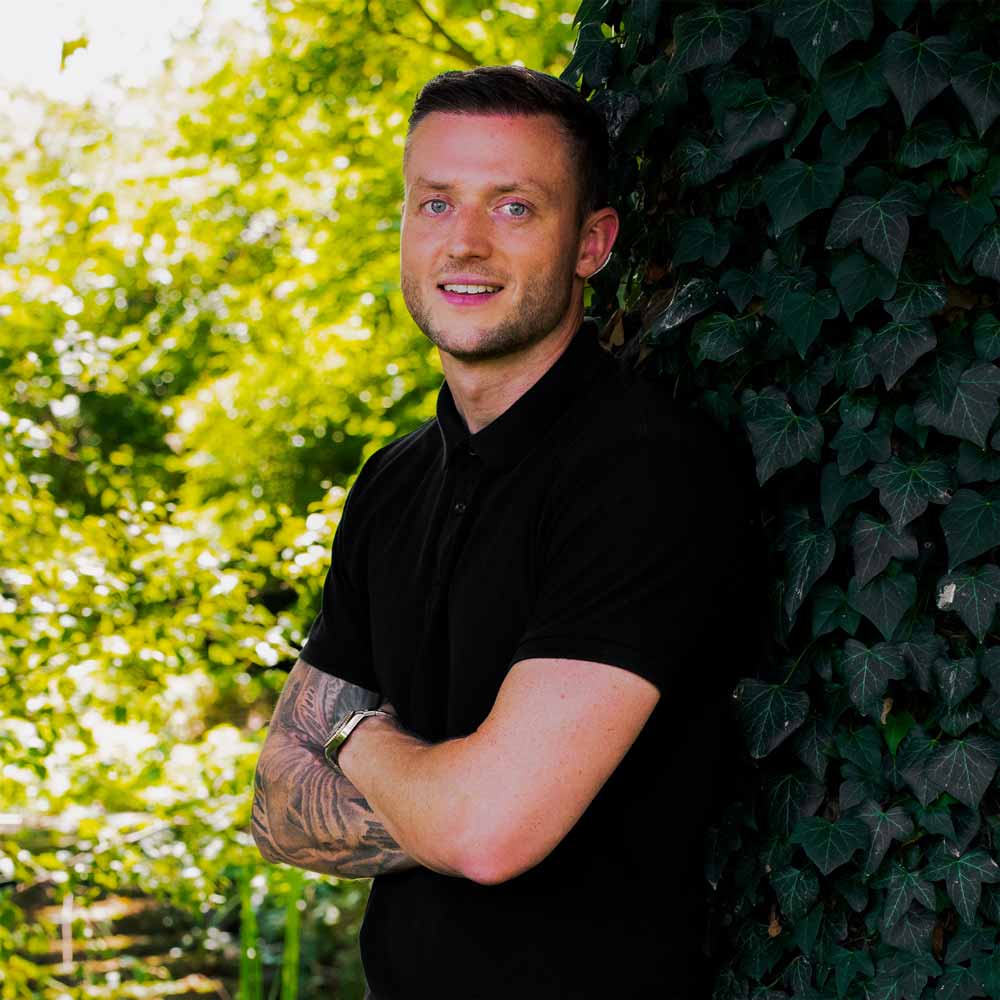
Meet The Guest - Kyle Zagrodzky
Kyle Zagrodzky is the founder and CEO of OsteoStrong, a global franchise focused on improving bone density and skeletal strength through specialised osteogenic loading devices. Before launching OsteoStrong, Kyle spent decades in the fitness and technology industries, operating multiple health clubs and software companies. After encountering early prototype technology developed to stimulate bone growth safely, he helped transform it into a scalable system that now operates in more than 200 locations worldwide. Kyle’s work focuses on raising awareness about the importance of skeletal strength as a foundation for health, performance and longevity.
OsteoStrong: https://www.osteostrong.me/

Meet Our Host - Andy Smith
Andy Smith is the founder of NewMed and CELLER8, and the driving force behind The PEMF Podcast. After more than a decade working at the forefront of Pulsed Electromagnetic Field (PEMF) therapy, Andy wanted to create a space that went beyond marketing, somewhere to explore the real conversations happening in wellness, longevity, and recovery. His passion for the podcast comes from years of seeing how much confusion and curiosity surrounds new technologies like PEMF. Through open, science-led discussions with researchers, athletes, and innovators, Andy aims to make complex topics accessible helping listeners understand what’s hype, what’s real, and how these tools can support a balanced approach to better health and performance.
The Audio
Prefer to tune in on the go? The PEMF Podcast is available on all major audio platforms, including Spotify, Apple Podcasts, and Google Podcasts. See all here.
The Video
Catch the full conversation with Kyle Zagrodzky over on our YouTube channel. Subscribe to The PEMF Podcast to see every new episode as it drops, along with behind-the-scenes clips and highlights.
The Transcript
Andy Smith 00:00
This episode is bought to you by Monk. Creators are the most transformative two minutes of your day. I've been using Munk Ice bath for a few months now and I've got to say it is a game changer. It's not just about cold it's about control. Two minutes in the plunge and I'm clearer, calmer and way more focused. What I love is how well built it is. Monk's ice bath are self-cleaning with ozone, precision cooled to three degrees and designed to actually look good whether it's in your home studio or wellness center. Plus the Monk app guides you through every plunge safely and effectively with programs tailored for things like anxiety, muscle recovery, morning activation, even hormone-aware guidance for women. What's interesting is how well it stacks of PEMF and red light. A plunge first activate the nervous system then follow with PEMF and red light to support deeper recovery. It's become a daily ritual, stresses system then restore it. Munk are on a mission to help more people become wildly resilient and turn stress into strength. You can get 10% off with the code PEMFPOD at discovermonk.com. Highly recommend and I need to get out of here. This is so cold!
Andy Smith 01:08
A quick disclaimer before we begin. The PEMF podcast does not contain any medical advice and the content provided is for informational purposes only. If you have any health concerns please visit a healthcare professional. Welcome back to the PEMF podcast. Today I'm joined by Karl Zagrodzky, founder of Osteostrong, a global franchise with over 200 locations worldwide. Osteostrong provides specialized machines designed to improve bone density with outcomes that have shown to outperform traditional bone anabolic drugs without drugs or surgery. So Karl, welcome to the podcast.
Kyle Zagrodzky 01:51
Thank you Andy.
Andy Smith 01:52
And you know thanks so much for joining us today. We're going to get into how Osteostrong actually works, why sessions only take seconds to improve bone density, how complementary therapies like PEMF can be used alongside these machines and science behind it all. So for anyone who hasn't heard of Osteostrong, what is Osteostrong? Give us that first intro.
Kyle Zagrodzky 02:15
Well, from the high level, we exist to help people improve their bone density and skeletal strength. We like to call it functional bone performance. The way we do it is with a simple once a week session that really takes about 10 to 15 minutes and it's sweat free. People don't get fatigued. They could come in their everyday clothes to do a session. And we're simply leveraging well-known, well-studied science called Wolf's Law. And what Wolf's Law is, is there was a scientist doctor by the name of Julius Wolf in the 1890s that conducted a study. And what he determined from his study, what it showed was that if you apply enough force to the musculoskeletal system, it will respond by making bones stronger. What wasn't known at that time and really wasn't discovered until about 2012, was a researcher out of the UK named Dr. Kevin Deere decided to conduct a large study with over 700 participants, where he tried to find out what the minimum dose response of pressure would be needed to trigger the effect of osteogenesis or building new bone. And what he found in the study was the all the subjects that were able to trigger this effect were ones that were able to experience a minimum of 4.2 multiples of their body weight through impact. And if they didn't hit that amount, no osteogenesis was triggered. The devices that we use at Osteostrong allow people to emulate high impact force, but without the impact. So we can have people of all ages, seniors, young people, everybody in between do sessions without injury, but they're able to get this this amazing adaptation that we get at Osteostrong. And that's what we do. So when you go to Osteostrong, all you're really trying to do is hit a level of force and call hit, you're really just pushing and pulling in a static environment that safely so that you can trigger your central nervous system to take over and start doing the work for you.
Andy Smith 04:32
So this isn't like a gym session, so you're not going to kind of turn up and get sweaty before work and that sort of thing, like how long typically is the session?
Kyle Zagrodzky 04:42
Yeah, a session is 10 or 15 minutes, 10 or 15 minutes, you can come in your everyday clothes, you'll do a session you leave, if you are in a hurry, you can get in and out of Osteostrong in about six or seven minutes, if you just wanted to do the session on our four devices and then leave. So each device is designed to target a specific area of the body. So that we're doing and we're strengthening the entire musculoskeletal chain as opposed to just one specific area. Yeah, I mean, it's, it's not a gym. So if the experience is, is kind of nice. And not that the gym isn't nice. I'm a big fan of fitness and, and, and all the benefits that come from that. But as you stated, it can be an intimidating environment for people that aren't used to working out or don't know what they're doing, or maybe they're not really happy with the way they look. And so it could be kind of intimidating. And then as you stated, you go and you do a workout and you get sweaty. So there's a time commitment, you know, you've got to get in the right clothes, you got to go do the thing. And then you got to shower off and put on new clothes. So it is a lot of respect for people that could commit to that and taking care of their bodies. But not everybody can do that. osteo strong does a lot of things outside of bone that that adaptation just like PEMF does a lot of things for you. But a lot of people just love it because they can just come in do a session I'll leave and as a result, we end up also attracting a lot of people that are over the age of 55, 60 years old, whose primary concern is bone density and perfecting fat fractures.
Andy Smith 06:24
No good and for what I understand you before people go on to the machines that she stand on a vibration please that is that right to get that right and why are you doing that?
Kyle Zagrodzky 06:34
So when it's important to understand when you're doing a session at Osteo Strong, let me step back, I'll explain what you're doing and then why a vibration plate matters. So there's four different devices that looks kind of like gym equipment, but it functions much differently than that. So we're going to put you into a position, say for instance, one of the devices looks kind of like a chest press. And once the technician gets you into the proper position, you will push as hard as you can for about 10 or 15 seconds, and then you're done. And you're looking at a screen, it's giving you some biofeedback, you can see your power arc and how hard you're pushing and all of that. And then you're done because once you hit that level of force, you've triggered the adaptation we're looking for. The reason why we do a vibe plate ahead of time is simply to wake up your nervous system, much like you'll see a professional sprinter running in place and jumping up and down. Yeah, they're trying to keep their heart rate up, but they're also getting their nervous system ready to send signals to their muscles so they can perform better. By standing on a vibe plate that's vibrating at about 30 Hertz per second, 30 vibrations per second, you're actually waking up your nervous system and getting it ready for a hard push or pull on whichever device you're using at the time. And so it's more just a neural adaptation to wake up your nervous system if that makes sense.
Andy Smith 08:05
Yeah. And why is that important? Is that going to prevent injury or is it, you know, or is it just to...
Kyle Zagrodzky 08:12
Well, injuries are very rare at osteo strong. So we've completed over 12 million sessions. There's been about maybe three dozen reported injuries. So it's like 0.000, whatever percent, like a very low percent chance of getting an injury at osteo strong, but it can happen. Getting on a vibrate doesn't really do anything to prevent that. It's just making sure that you're there to achieve an objective. And the objective is to hit a level of force that triggers osteogenesis or the development of new bone. We want to make sure that your time there is well spent. So we just want to make sure that your nervous system is ready to do that, that activity. So it's like, okay, well, you're going to do this, you might as well wake up the nervous system so that you're able to push or pull as hard as you can, if that makes sense.
Andy Smith 09:02
Yeah and you mentioned that there's four different types of devices so can you break those down and are they just working in different areas of the body or why can't you just use one?
Kyle Zagrodzky 09:11
Yeah, great question. So there are four different devices. So there's one that I described that looks like a chest press. So your arms are in front of you like a chest press, and then you're going to push now the machine isn't putting any load on you. It's not moving. In order to when you're hitting the levels of load that we are able to achieve in a static environment at osteo strong, then you don't want your joints to be moving and you don't want to be letting down heavy weights because you're doing many multiples of your body weight, you want your joint to be static. If you started moving your joint with that much load, you would hurt yourself. The other one is what we call a lower growth trigger or lower GT which looks like a leg press is designed to strengthen the bones from the base of your feet all the way through your hips, the upper growth trigger or the one that looks like a chest press is going to strengthen from the palm of your hands all the way with your shoulder, your clavicle. Then we have a core which will help to strengthen your core muscles. And then finally, one that we call a postural GT or it looks also like a deadlift where like you're holding a wheel barrel and you're simply lifting up that way. Those are the four devices. Now, why wouldn't you? Could you do just one? Well, sure, you could do just one, but we've done different analysis of DEXA scans of professional athletes. So a soccer player will have like a right legged soccer player will have higher bone density in their left hip than they will in their right right leg or a tennis professional tennis player will have higher bone density in their right arm than their left arm. And that's because the amount of impact force that they're getting on that appendage. So if you're exercising just one area, then you're going to get more bone density increase in that one area.
Andy Smith 11:07
No good and you know people just turning into this podcast might be listening and initially thinking right well you only do a couple of seconds on each on each machine you know how can that possibly be enough time to even be effective you know so. It but you know is short term exposure actually the point what how does the you know how does the process work with just a few seconds.
Kyle Zagrodzky 11:28
Yeah, that's a really common question that we get. So it's a hard one for people to really get their head around until they start seeing results in others or in themselves. And the reason for that is, you know, we are trained to think, you know, in order to get a physical outcome from an activity, or physical benefit that we're going to have to, you know, fatigue that area like with with resistance training and or cardiovascular training. And so it stands to reason, well, shouldn't we do this for bone? Well, if you think about impact force, if I were to jump off of a chair or a high countertop and hit the ground, I'm really impacting the ground for a hundredth of a second. And when we look at, like a gymnast, for instance, gymnast, and, and actually, professional figure skaters have really high bone density. And it's because it's because the amount of impact they do, they're also very strong, because the central nervous system won't allow your muscles to become stronger than what your bones could actually handle. And so pound for pound, they're amazingly strong compared to other athletes, but it's not because they're working out harder than other athletes, because they're getting impact force. But even a professional gymnast that's doing flips and jumps and all the things through an entire afternoon of of training. Well, if you add up the total amount of time that they're getting impact is probably less than a second. Because during impact, you're only achieving force for about a hundredth of a second and osteo strong, you're going to be doing force massive loads of force for, you know, five to 10 seconds where you're actually creating a lot of force. The other thing is, is once the adaptation is achieved, it continues on there's this, there's a type of blood test called a P1 NP blood test. And what it does is it measures a type of collagen that is released into your bloodstream when your body is in osteogenesis and growing new bone. It is the growing bone growth or osteogenesis is the only process in the body that releases that type of collagen in your bloodstream. And so it's a really helpful blood test because when you do an osteo strong session, then to answer your question specifically and scientifically, you would have to be able to do a P1 NP test every day for a period of time to see whether or not the osteogenic effect is lingering after that session. And the answer is that it is. In fact, we've done P1 NP test for a week after someone's session, two weeks after their session, and they are still in some level of osteogenesis above normal.
Andy Smith 14:19
No, it's good. I think the gymnast thing for me just really puts into perspective. It makes it, it makes it understandable as to why you only need that kind of, you know, the impact training side of things. You know, with, with, with myself, my brand, CELLER8, you've got OsteoStrong. Before we take a deep dive into the, the bone density kind of questions, what led you to start Osteo Strong and, and, you know, do you have your own kind of background or story in, in, in this area or bone density?
Kyle Zagrodzky 14:49
No, actually, I was my wife and I had a lot of experience operating multiple fitness centers and in the 90s and early 2000s. And I also owned a software company at that time. We decided to sell off our gyms because my wife was the primary operator of the gyms. I was the back end guy, the marketing, the CFO, all the things, right? She was the primary operator. And she got pregnant with our first son and she wanted to be a mom. She didn't want to be a business owner. So I started selling those things off. My software company was doing really well. And so it was really no big deal. We sold them off and I continue to do that. But I get a lot of personal satisfaction around seeing a health change and shift in people and I liked being a part of it. And so I wanted to get back into that. And it was 2013 or 14, I started thinking about starting another gym chain of some kind franchise or just cell phone that wasn't sure. But as I looked at the different gym concepts out there, it was a little unappealing to me, not because I find the fitness industry unappealing. I love the fitness industry, but there was really no innovation in it. There was, it was just, there were boutique gyms, large box gym, large box gyms, personal training group classes, these kinds of things, but there was really not any innovation. So as I looked at it, I thought, you know, I could get in here and create a fun brand and make a lot of money. But that wasn't exciting to me. And so just as about the time I made the decision to not open up a gym chain and find something else, I ran into Dr. John Jake, which he showed me his prototype device that he had built. I was fascinated by it. I said, how many of these things have you sold? He's like, well, it's, it's new, we've only got maybe a dozen people using it. And I said, I want to take you out to dinner. So I took him out to dinner. And I said, my, my hallucination is that after you sell one of these devices to somebody in a month, they're not even using it, whether it's a business or otherwise, he says, what are you reading my emails? And I said, no one believes that you can do something for roughly doing about a minute of effort, because you're using each device for about 10 or 15 seconds, and there's only four devices, no one believes that you're going to be able to do a minute of effort one day a week and get an outcome. And even if they start getting an outcome, they're going to attribute it to anything else, because it's so unbelievable. And I said, I think you've developed one of the most profound musculoskeletal development devices in the history of the world. And I want to take it to the world. He's like, Yeah, I've heard that from about 50 guys. I said, Well, you haven't met Kyle Zegaratsky, when I when I get my teeth in something, I don't let go. And so, and now it was exciting to me, I wanted to do something unique. I want to do something that no one else had ever done. And it was and it was daunting and kind of scary too, because there was no such thing on skeletal strength conditioning, and people weren't really thinking about it. And the only people that were concerned about it were elderly people who had osteoporosis or a fracture, or their parents had gotten a fracture, and they wanted to prevent that. And so there wasn't no one even knew that it was a possible or was a thing. So I had to create an industry. And there's technology. And I'm just somebody that likes to dream big and do big and unusual things that helps people. And I was just super excited about it. To me, it was just a challenge. It was like challenge accepted, let's go. So I burnt the boats and started the brand to see what, what I could achieve in the world with my personality behind this beautiful technology.
Andy Smith 18:34
No, that's cool. And you know, people don't share their DEXA scans online. You know, you see people, you know, showing off their muscles and people go to the gym and they're training their muscles and all this sort of thing. And they're looking healthy, but people neglect their bones, you know, like it's and it's so important. You know, post menopausal women, they have a lack of estrogen. It leads a lot of the time to osteoporosis and weakening the bones. And people, you know, a lot of the time when people get old, a break is ultimately the reason why they stop moving and decline very quickly.
Kyle Zagrodzky 19:09
It's either a DEXA scan or a break that gets people to think about their bones. So they aren't thinking about them.
Andy Smith 19:15
Yeah.
Kyle Zagrodzky 19:15
And the primary reason why people engage in fitness is it's vanity. It's healthy. It's good for you. But people want to look in the mirror and go, dang, am I look good? I get it. I get it. I mean, the health is usually the tertiary benefit. They know it's healthy. They want to do something healthy. But let's be honest, the primary reason why people engage in fitness is vanity. And so whatever your motivation is, I'm happy you're doing it because exercise is good for you.
Andy Smith 19:47
Yeah, so we let's talk about the bone density with with the osteo strong. So we we've touched on this as well. And without going kind of too into the deep into the rabbit hole, kind of how do the devices what is the science going on here? And why is it increasing the bone density?
Kyle Zagrodzky 20:03
So what osteo, uh, Osteostrong does is it, is it triggers your body's, uh, adaptation to build bone. Now there are things that are, there are other things required foundationally to, uh, to really benefit from that adaptation. So it's like, for instance, I can, I can take a lot of amino acids and or protein supplements, but if I'm not working out, I'm probably not going to gain any muscle, right? I may just get fat as I'm eating too much protein. It's just calories and my body's like, what am I supposed to do with all this? So you need the stimulus to turn it into muscle mass, right? Um, Osteostrong is the stimulus to build bone, but just like working out, if I'm working out and lifting weights, but if my nutrition is bad, I'm probably not going to see very good results if that makes sense. So, um, so yeah, osteo strong will trigger it measurable by a P one MP blood test and everybody we've had a P one MP blood test on shows that this effect is happening, but not everybody will get results. And most people will, whoops, stepped on the cord on my laptop. Most people will, but not everybody will. And the differentiating factor is usually one of two things. One is nutrition. You need to have the nutrients. So you've stimulated your body to build bone, but it needs to have the materials to do it. Uh, two is usually some type of hormonal deficiency, like hypothyroidism can be a big blocker to the results that are possible at osteo strong, or as you mentioned, low estrogen and even low testosterone can affect your results. So we do encourage people to have a hormone optimization and a proper nutrition, and in those cases, almost everybody gets results. The only other ones that may stumble would be somebody who, for instance, has, um, must, uh, multiple sclerosis, some other autoimmune disease. They could be fighting cancer, um, or undergoing cancer treatment or taking a certain medications that really inhibit brown bone growth, like, uh, certain types of steroids to reduce inflammation and things like that. So there's a lot of medications that could hurt bone density, uh, as well. That makes sense.
Andy Smith 22:24
Yeah, yeah. And what signal are the bones responding to when someone uses the machines?
Kyle Zagrodzky 22:29
So you're imagine your bone is like a scaffolding, right, a holding up structure. And so what you're going to do is you're going to put load on it when you're doing a session at osteo strong, you're trying to push as hard as you can, you eventually get to a point where you can't push any harder. You're like, Okay, I gave it my all. That's how much force I can produce. And usually the reason why you're unable to push harder is this thing called neural inhibition. And my best example for neural inhibition is like, your grip strength is probably you fit. I would estimate just by looking at you if I were to put a grip strength tester on one of these things that measures your grip strength that you could probably impose 130 to 150 pounds of force through your hand, that would be enough force to break somebody else's fingers. However, if I said, Okay, make a fist and try to either grab your other hand and break your own fingers or break your own fingers by making a fist, you couldn't. The reason why you couldn't is this thing called neural inhibition, your central nervous system won't let you hurt yourself, or it will stop you when the pain gets too great, just as that by the same token, your central nervous system will only let you push as hard as your skeletal system will allow it will will go before it causes damage. So when you hit a peak threshold of force at osteo strong, your central nervous system is protecting you to keeping you from going further as you strengthen your bone and your on your muscles because osteo strong will do both. Your your force production goes up and quite substantially over a relatively short period of time. And I don't know if that actually answered your question or not.
Andy Smith 24:22
No no no that works.
Kyle Zagrodzky 24:24
Okay
Andy Smith 24:24
So being devil's advocate here, why can't I just go outside into the car park and jump up and down and you know, back my bones around a little bit? But why would I use your equipment over doing that?
Kyle Zagrodzky 24:36
It's much safer and it's more effective. So for instance, like I gave the gymnast example earlier, what people don't know about gymnasts on average, they retire at the age of about 19 years old. And those who stick with it have a higher rate of like hip and knee replacement surgeries as they age. And so while impact is really good for building bone, it's really bad for your joints. And so what do you do? There's, there's the conundrum like, wait a second. I want strong bones, but I don't want to damage my joints. Impact is great for the bones, but not for the joints. So what do you do? And you need a lot of force, 4.2 multiples of your body weight, and that's harder to do than you think. And the reason why is not if I were to take a weight and just drop it about 20 inches off the ground and it were to hit the ground, it would generate about 4.2 multiples of its own weight on impact. So that's not too high, like, hey, you know, 20 inches off the ground, you know, that's no big deal. But you're also equipped with shock absorbers called knees and hips. And your central nervous system doesn't really like impact so much. So you end up flexing your hips and knees to take that shock out of it. Dr. Jake, which had created an app for the iPhone called fracture proof, and he leverages the the accelerometer in your phone so you could just download the app into your body weight, hold it tightly against your hip, and then jump on off on the concrete out there. And what you'll find very quickly is that achieving 4.2 multiples of body weight is pretty hard to do. I did this, I download the app, I jumped onto a concrete floor, and I mean, I was trying to do it and I couldn't couldn't achieve it. Then I got climbed up on a chair, I jumped off of that. And I didn't hit 4.2 and I'm like, okay, I'm higher. So then I climbed up on a countertop and I jumped off of that and I landed on the ground. And I still didn't achieve it. However, I'm 36 inches or a meter off the ground, basically, and I'm hitting the floor, I should have generated 4.2 multiples of body weight, but I didn't and I was trying not to flex my knees as much and it kind of hurt a little bit. So, yeah, it's possible. You can do it. It's hard. I reckon, you know, if you don't have an osteo-strong, yeah, you should try to at least do that once a week or you're just jumping on the ground doing heel drops or whatever you can do to kind of cause that jar at least once or twice, but you don't need to do it multiple times. You just need to do it once and it will trigger the effect.
Andy Smith 27:12
Yeah, yeah. I mean, I do some, uh, CrossFit and those sorts of things and functional fitness I find is, is pretty good in terms of getting those impact stuff. So, um, just another example to throw out there for people to kind of put this into practical, um, you know, while, while they're listening, but, um, how long does it typically take as well before you start seeing a difference on, for example, on a scan? Because we know with PEMF, you know, it's not an overnight treatment, especially if you're trying to treat bones. Um, but you know, with OsteoStrong, is there, is there a timeline where you can kind of judge where people could start noticing a difference or seeing a difference?
Kyle Zagrodzky 27:51
Yeah, absolutely. So you could go get a P1 and P blood test within a day of going to Osteostrong and see, yep, my body's in osteogenesis, I'm building bone, but that's not practical for most people. Fortunately, at osteo strong, there's, there's four different things that people generally experience when they go to osteo strong, they're there to build bone density, physical strength, balance, and joint and back pain. The balance the joint and back pain and physical strength come very quickly. And that will inspire people to keep going because like, oh my gosh, I'm so much more balanced. And oh my gosh, I'm feeling so much stronger. And that pain that I've had my back for 20 years is gone after a few sessions, what happened, right? So those things happen very quickly, which is fortunate, because most people I don't think would be willing to stay around for how long it takes to actually up on a dexa scan. Now bone bone is the most dense material in your body, it grows the slowest, it takes about seven years for your skeletal system to turn over. So your body, the body that you and I are sitting in today is different, is almost a completely different body than the one physically than one we had seven years ago. And bone is one of those materials that turns over more slowly. And it grows from the inside out. So that process of growing in that material to be moving to the outside of your bone can take six to 12 months to see a result on a DEXA scan, which is one of the reasons why we inspire people to get the proper nutrition, test your hormones, those are things you're going to want to do anyway, because you're going to feel so much better if you sort out your your estrogen, testosterone and thyroid. So you're going to get the benefit of doing that right away. But if those things considered, yeah, you're going to take about six to 12 months to see a result in bone density.
Andy Smith 29:47
Mm hmm. Cool. Okay, so before I go on to the next list of my questions, what I want to do, we do these quick fires every now and then. So I'll throw out some questions, get you to answer very shortly one or two word answers. And then we'll take a bit of a deeper dive on to those questions afterwards.
Kyle Zagrodzky 30:01
Okay, true thing.
Andy Smith 30:03
Yeah, cool. So the first question, what's the biggest myth about bone density?
Kyle Zagrodzky 30:09
The biggest myth is that people can, that it's something that happens just at a function of aging.
Andy Smith 30:13
Is bone loss actually reversible or is it more about slowing the decline?
Kyle Zagrodzky 30:18
Absolutely reversible. We see it all the time.
Andy Smith 30:20
Biggest mistake people make when trying to improve bone density?
Kyle Zagrodzky 30:24
I'm gonna get in trouble for this go to their doctor
Andy Smith 30:27
One habit that damages bone density more than people realize?
Kyle Zagrodzky 30:31
lot of things, lack of nutrition, lack of activity, and consuming foods and medication that hurt bone density, so there's three things.
Andy Smith 30:41
And on the other side, one habit that supports bone density that most people ignore?
Kyle Zagrodzky 30:45
Sunlight and vitamin and or vitamin D3.
Andy Smith 30:48
What age do you think people should really start caring about their bone density?
Kyle Zagrodzky 30:52
14.
Andy Smith 30:53
What other complementary therapy you like that can help with bone density?
Kyle Zagrodzky 30:59
Nutrition and hormones. There's other, there's other things there. There are the things that do like PEMF can help with bone density too. Um, found, but it can stimulate osteo plastic activity, which is one of the many reasons why I like it.
Andy Smith 31:12
And can Osteostrong replace strength training?
Kyle Zagrodzky 31:15
No, and yes. It depends what result that you want. So as I mentioned earlier, most people go into doing strength training for vanity purposes. So they want bigger muscles, osteo strong won't develop bigger muscles. As far as strength goes, both are helpful. I would state that I believe from what I've seen, thousands of examples that osteo strong is the most profound strength training device in the world.
Andy Smith 31:47
No, good. And we'll take a bit of a deeper dive into some of these now, so...
AD 31:52
PEMF therapy is all about restoring balance, improving circulation and enhancing the body's natural communication systems. But repair doesn't happen with the signals alone. It requires stem cells, the body's built-in repair units. As we age, the number of circulating stem cells naturally declines, which can slow recovery and renewal. Stemregen was developed by stem cell scientist Christian Drapeau to support the release and migration of your own stem cells, using clinically studied plant-based ingredients. When used alongside PEMF, many people view it as a complementary approach. PEMF supports the environment for repair, while Stemregen release supports the availability of the stem cells that do the work. It's a foundational daily supplement designed to add more stem cells into circulation. PEMF sets the signal and preps the environment for repair. Stemregen release helps supply more of your own stem cells needed for that repair. If you want to support all aspects of repair, head over to stemregen.co and use the code PEMFPOD to get 20% off your next purchase. This offer is for US customers only.
Andy Smith 33:01
And one thing I wanted to kind of make a point about is that we're talking about bone density issues here, and the same thing with PEMF. We talk a lot about conditions and that sort of thing, but that's not specifically what these therapies are just for. So, you know, we've seen you working with high level athletes. So can you just kind of break down why an athlete would benefit from this type of training?
Kyle Zagrodzky 33:24
Yes, strength is important for athletes. I'll give you I'll give you a I'll give you a very scientific real world example, which is a really cool one I'm talking about frequently with people who asked me this very question. Dr. and song was a contractor for NASA. And she did a pilot study on osteo strong. She was the only subject in the study, which makes it a not a very efficacious study. It's a pilot studies like is this something worth doing a bigger study on? That's why you do a pilot study. But reason why I bring this up is for two reasons. One, and Dr. and song was 31 year old at the time that she published the study, and she was a professional power lifter. So when you take those two things into consideration, a human being will hit what we call peak bone mass, the highest level of bone density that human beings typically hit in their lifetime is the age 30. And she is a power lifter. So by by by the very nature of the athletic sport that she has chosen to be involved in, she is lifting the maximum level of force that she can lift in five different exercises so that she could be competitive. And she was an amateur, she's a professional. So as a professional power lifter who's 31 years old, probably the worst person you would want to test whether or not osteo strong works or not, you're already at peak bone mass, you're already doing like power lifting. And you're going to test two things about osteo strong, does it increase bone density? And does it increase strength? And after six months, here's what happened, she increased her bone density by almost 7%. When it came to strength, the fascinating thing about it was in the study, before she did the study, she was tracking her rate of, of, of increases in each of her five competitive lists every month, given the allow the her exercise routine and her nutrition. So she's very meticulous individual. And she could tell you, you know, I was I was increasing by a pound and a half and this one and a half a pound in this particular lift and nothing in this particular lift. So they were they were small gains. And that's what you would expect to see from a professional athlete, like, like fractions of a section second matter, like in swimming or in running when you're at the professional level, minuscule changes change are the difference between first place and fifth place in some of these when you're competing with professionals. That's what she was tracking. And that's what she saw. She started osteo strong. And in her first month, four sessions, she increased the rate of of her the amount of weight that she can lift in each of her five competitive lists equivalent to one year of going to the gym. Yeah, that's incredible. So she achieved in one year, in one month, what would have taken her a year in the in the gym to achieve her words, not mine. She said that and she said, had I not done this study myself, I wouldn't have believed it. She now she does osteo strong all the time. She won't stop doing in fact, getting athletes to tell that story is very difficult because they don't like exposing their secret weapon. And it doesn't work just on power lifters. Tim O'Donnell was a professional Iron Man competitor. In fact, in 2019, he was ranked number 250 in the world, which while that's not number one is still an impressive still an impressive feat 250 in the world at one of the hardest sports in the world is amazing endurance sports for sure. He was going on to compete in the Kona Hawaii Iron Man competition in at the end of 2019. Six months before that event, he added osteo strong true his training regimen and at the at the advice of his trainer, Rebecca Keat. All of his time started improving. In fact, at that event, he went on to set the US record at that event, which was astounding. All those gains came from adding osteo strong, so it will augment anything you're doing. And so if you are a strength, if you know, I'm not saying don't do strength training, but if I were to do one or the other, it would depend on what outcome if I just want to look good, naked, or in a bathing suit or whatever. I'll do I'll do resistance training if I want for longevity and strength and performance, I'll do osteo strong, but I want both so I
Andy Smith 38:08
I do both. Yeah, and that's a good point, you know, because a lot of people just think that this sort of technology and therapy is for people that are chronically ill or just with osteoporosis. So it's good to share those experiences. One thing we also noticed when we're doing the research on this episode was that Osteostrong can help with balance as well. Can you give a little bit of an example how it can help with the balance of people?
Kyle Zagrodzky 38:31
Sure. I can, I can probably, um, give like an example first or an analogy. So, um, so, uh, I remember when I was young and first learning how to add and subtract, multiply and divide fractions, right? That is not something that is comes natural to the human brain. And I remember as my father was trying to get me to understand these concepts, I, I started crying. I can't, I don't understand. It's like breaking my brain. How does, you know, three fifths and a quarter, how do you, like, what, I don't even understand these concepts. So, but once you start to put it together and is the, that, that starts going off, you have two neurons that don't know how to communicate and then they start to understand the concept. They start to communicate the more you do it, the more you strengthen the Mylon sheath between those two neurons. And eventually it becomes easy. Same with riding a bike. First time you do it is very awkward. You're falling down. Maybe you're crying because you can't get it down and all your friends are riding their bike. And then eventually you start to get it. And the more you do it, those neurons quickly get laid down, strengthens the Mylon sheath. Once you learn how to buy, write a bike, you never forget how the Mylon sheath is there. Now, with what Osteostrong does. Imagine if I'm lifting a handweight and it's a five-pound handweight. I am using my bicep to do a curl with that handweight, but it takes a very minimal neurological commitment to move a five-pound handweight for me. But I am doing it, but there's not very much signals going for many signals from my brain to my bicep saying, hey, lift this weight. Now, the more weight I'm lifting, the more recruitment of my neurons are required. And the more that I do that, it's called training a muscle. And that's why I said it depends on what you want to achieve because Osteostrong will make you really strong. But what it does is when you're pushing as hard as you can against a static object, it requires a massive neurological commitment to get your muscle to fire as hard as you can. And it strengthens the neurological connection between your brain and all the nerves that lead to that muscle. And so you end up really strengthening the the myelin sheath that connects all the neurons from your brain to that muscle. And so it responds more effectively than if I were just to lift a five-pound weight. So one of the things that we do is we measure a person's balance when they first come into Osteostrong. Well, that's going to stand on one foot for as long as they can. And when you're dealing with the elderly over 60 years old, I say elderly, I'm 57. When you're still looking for it, lean into it. I plan on living for a very long time. I'm going to develop my body to live for as long as God will let me stay here. But I will have the body that will take me to 150 if he'll let me. So you stand on one foot, and we'll have a lot of people that struggle to stand on one foot for five or six sessions. After they do just a few sessions at Osteostrong, they're standing solidly on one foot for 20 seconds. Now, this is massive. If you know anything about longevity, and you talk to a lot of people like I do, one of the predictors of mortality is your grip strength, your gait, and your balance. In fact, Bloomberg published a study several years ago where they had over a thousand people over the age of 65 stand on one foot for 10 seconds, and then they waited 10 years. And at the end of 10 years, what they found is those people that couldn't confidently stand on one foot for 10 seconds had an 82% higher mortality rate over the next 10 years. It is because fracture is so devastating to the elderly, the number one fear of an older person is falling. That's the thing you're scared of most. It's very sad when, when somebody falls and breaks a hip, a hip fracture carries with it a mortality rate, or two year mortality rate that is higher than that of breast cancer. And so it could be devastating. And so it's very sad, especially when you come across somebody who's in their 60s or 70s. And, you know, their mind is with it. They're, they're having a good time with life. They're enjoying their, their spouse and their grandkids and doing the things that they like to do. They've earned it, right? They've done their life. Now they're, they're enjoying the things they love. They have a hip fracture and then everything goes downhill. If they do survive past two years, quality of life is greatly diminished. So yeah, they're terrified of it. Doing osteo strong has a profound impact on balance. In fact, one of our franchisees in Florida is a fall prevention specialist, physical therapist. In fact, he has a clinic with eight physical therapists whose job it is to improve the balance of elderly people. He bought an osteo strong franchise and he called me after six months of owning and he says, nothing I learned in school or that I do in my clinic affects a person's balance better than what I see at osteo strong. He said there's something more profound going on here. Like this is, this is insane. He was just, he's a great guy and I appreciated that, that, but we see that all the time. It's huge.
Andy Smith 43:56
And is there, is there anyone in, um, you know, any clients or patients that can't actually, they shouldn't be using Ostero strong or, or should avoid it. Is there anybody in that category?
Kyle Zagrodzky 44:06
I mean, sure, there are a few contraindications if somebody has a hernia, unmedicated hypertension. If they if their doctor tells them don't engage in exercise, they got some other, you know, they're recovering from a surgery or something like that, it's helpful if they have both arms and both legs because you're doing a symmetrical push. It's hard to get like if I if I had an amputated left arm, I wouldn't be able to do three of the four exercises at osteo-stron just because it when you're loading that much, you can't you have to be symmetrical when you load because you don't you'll cause really biomechanical imbalance if that makes sense.
Andy Smith 44:50
Yeah. And I saw you do a talk online about insulin resistance and how using the machines at Austria Strong can help with that and knock on to like have a knock on effect with late weight loss. How does that work?
Kyle Zagrodzky 45:03
Well, it's a theory. And because it's hard, what we could do is we could test the outcome. So there was a Jake wish and hunt did a study back in 2015 on pre type two diabetics. And they had them do osteos. They told them don't change your diet, don't change your exercise, just do osteo strong for, for three months. And then they did a pre and post blood test HBA one C blood test and then found that they had reduced their a one C. And when compared to other studies on singular modalities that reduced a one C, it was more effective than metformin resistance training, restricted calorie diet and cardiovascular training. Now that was a pretty small study. It's, it's like less than 20 people in the study. So not super efficacious. We do see that with people who have issues with insulin resistance who are on medication, start osteo strong, and that starts to come down pretty quickly. And the question is, is why is that happening? Well, our theory is that muscles are getting stronger, but not bigger. And so there's this concept called myofibril hypertrophy, which is essentially the making muscle tissue more dense, the cell at the cellular level. And we thought, well, if that's happening, maybe they're adding more insulin receptors on their muscle cells. So that was the inspiration for doing that study. It doesn't prove that that is what happening is still our theory. There is another theory on some study that I was reading recently. Osteoblasts are the cells in your bone that build up bone, right? You want those, but you also need osteoclasts, which are the cells that break down bone and there and they serve a function and you need them. So your bone is always remodeling. Your body needs minerals and nutrients from your bones. So we'll pull that stuff from your bone via your osteoclasts and that kind of thing. But when osteoblasts are kind of done with their job of building bone, they turn into osteocytes, which are cells within the bone. And those osteocytes will actually end up going through your pancreas and inspire a healthy insulin production. And so it could be adding more insulin receptors. It could be improving and or increasing the amount of osteocytes going through your pancreas. We don't really know for sure. It's probably one or two or both of those things. Those are both theories, but it is an effect that we are seeing.
Andy Smith 47:41
And a good, uh, an interesting link actually before this episode. And the reason kind of why, why we're here at the moment is, um, we, you know, I'm in the UK, you're in the USA, and there's, there's many, many Osteostrong centers in the U S but there's, there's a very small handful or a number in the UK. One of them is actually just a few miles from us, uh, in, in Tumbridge Wells in, in England. And they contacted us and, and they bought, um, uh, a PEMF device. They bought a CELLER8 device quite recently to use alongside the osteo strong devices. So, um, that piqued my interest and, you know, I wanted to understand, you know, the combination of the two and why we're using them together. And I understand the benefits of PEMF around, around bone density. But do you, do many other osteo strong locations offer PEMF? Is that quite, is that quite a common modality that you guys use alongside the devices?
Kyle Zagrodzky 48:34
A lot of Osteostrong centers will have PEMF devices. I like it. I like PEMF for a couple of different reasons. You know, it's funny. Osteostrong does a lot for the body. We don't even fully understand everything that it's doing. It's hard to test and research everything. We see these strange outcomes like joint and back pain. And knowing exactly why that's getting rid of chronic joint and back pain as effectively as it does, we think we know it's consistent. But when you look at PEMF, it does a lot of things to microcirculation. And my opinion is the most important thing that it does. But that's not why people come to osteostrong. Most people are coming there because they want to build bone. It helps to stimulate osteoblastic activity. I think it's something that people should do once or twice a day, personally. But if they're coming in just once a week, great. Even on the PEMF device, osteostrong is already stimulating a lot of that activity, osteoblastic activity, but it also greatly improves microcirculation, which is huge for a lot of reasons. And so if that is the only benefit they got from it, then that's brilliant. It's amazing.
Andy Smith 49:52
Yeah. And how do you generally apply that osteo strong? So is that, is, do you do it like a 10 minute session on the, on the PEMF beforehand or do you do it alongside the machines? How's that?
Kyle Zagrodzky 50:03
They usually do it afterwards, but they can do it beforehand. We like them to do their machines first, not. And I think there probably could arguably be a benefit to doing PM PEMF first. But the most profound technology that's going to help them with bone density and osteo strong is going to be the four devices that we have there that we call spectrum equipment. And we don't and some people may get a text or they may have to leave or they're in a hurry. We don't want them to miss that one activity that's going to give them the outcome they want. So we require members when they come in, they go to vibe plate, they do spectrum, they end on vibe plate, and then they can go engage in other modalities at the center, like PEMF.
Andy Smith 50:50
Yeah no good and did you have a personal experience of PEMF yourself you know like we saw I saw on your instagram that you you're sitting down with Tony Robbins and I know he's a he's a big advocate for foster strong but also. A keen user of PEMF therapy so you know what when was your first experience of PEMF or did you were using it yourself or did it come along the along the wellness journey.
Kyle Zagrodzky 51:11
So I really wasn't much of a biohacker. I mean, OsteoStrong, I started the company. I mean, I started the process of putting together the company in 2011, started franchising in 2012. I mean, there were biohack type of things I was doing. I don't even think it was much of a term back then. And so health was always something that I was interested in, but there's been so many technologies that I've learned about and over the years just being in this industry and PEMF is one of them. I don't really remember the year that I encountered it, maybe 2015, 2016, I don't really remember. And I like the technology. I have a mat, I use it every night when I go to bed and I should use it in the morning too, but it's a function of time. Sometimes I've got all, just like you, I've got all kinds of biohack stuff that I do. But I've seen it do some pretty amazing stuff for even people who are experiencing pain and they're like shoulder or back is pretty cool.
Andy Smith 52:13
And do you have any other favorite technologies that either use yourself or OsteoStrong that you use as complimentary ones?
Kyle Zagrodzky 52:20
Yeah, red light therapy. I'm a huge fan of we designed our own red light therapy system because most of it is most of it isn't doing what people say that it's doing. Like if you go to different websites that sell PEMF, I mean, red light, they're making a lot of claims that are based upon research that was done on red light lasers and a laser is much more powerful and penetrating. LED bulbs aren't and so what they're saying that it supports and does is not what it does. So we end up designing our own. There's only two devices I've seen in the world that are any good in terms of actually effectiveness based upon research, frequency and power. That's ours and we don't even really sell ours to the public. We've only sold it to Osteo Strong. We just have we will eventually but and there's another one called Rembrandt, but it's very expensive. Those are the two best ones in my opinion. We also have a bio charger in our centers. It really is foundationally based upon Rife technology and if you know what Rife technology is, Rife technology is. Well, I don't want to geek out too much. That's good. We have a whole different. I mean, you and I could probably have a whole podcast on on on electromagnetic frequencies and the benefits of body, but this one has specific recipes that have been shown to have really profound health outcome. So you'll you'll see a bio charger in there and compression boots for circulations. What are some of the other modalities you see? I use at home. I use a hydrogen oxygen generator. Avicen, which is a deal that helps with healing hormone hormonal optimization and circulation. So there's all kinds of thing. I mean, I'm a bio hat geek now. So there's all kinds of stuff that i do now.
Andy Smith 54:30
I've got a HBOT in my house now so i've got a hyperbaric therapy oxygen chamber
Kyle Zagrodzky 54:39
I don't have a hyperbaric chamber yet, but uh, it's
Andy Smith 54:42
Put it on your wish list, it's is one of my favorite now, it's this great.
Kyle Zagrodzky 54:45
I have to build a building on my property here. I don't have a place to put it in my current house, so I'm actually in the process of building a biohack building and barn on my property, so I should have that done next year sometime.
Andy Smith 54:59
No, no, amazing. Well, we're moving offices and we're we're getting a big center where we hope to have all the equipment and and having people coming in and using it. So maybe we can talk to you about some osteostrong devices too. Maybe we'll set up a set up a center there.
Kyle Zagrodzky 55:15
Yeah, we'd love to help you with that. Normally, we don't sell our equipment to non-franchisees. What's that?
Andy Smith 55:24
Maybe we'll get someone to start one in the center for us. What was your decision to add all these other therapies? You know, it's good to, you know, talk about these and use them. You know, why did you want to use them alongside the osteo strong devices?
Kyle Zagrodzky 55:41
Customer experience so to do a session at osteo strong you're doing one minute of effort you're there for that that just a session on our four devices. Is you know five to seven minutes depending on how quickly you move from device to device right and then that's all you really need but consumers are kinda left wanting more right and so yeah it does it when you do a session at osteo strong you'll feel like you did something but it's not gonna be like. You're gonna be like did I do it I guess that is you know and so yeah it's it's gonna give you a great outcome but it's not gonna give you an experience like if I were to get a massage or do a cold plunge like I'm gonna feel like something happened there and so we we want to focus on. Technologies that would both create an experience and and help to augment or some support what it is that we were doing at osteo strong so people see red light and they hear about PEMF and all this kind of thing and so we we make those available to them and people enjoy using and they like the experience they want to stay is fun being at osteo strong.
Andy Smith 56:50
Yeah, no, good. Just wrapping this one up. You know, someone listening could take away just one thing about bone density or long term health. What would you want it to be?
Kyle Zagrodzky 57:00
So that it's absolutely foundational to both physical freedom and longevity. There's a lot of things you can do to influence longevity and this course, this space is growing like crazy. And there are a lot of experts giving absolutely fantastic advice whom I love, like with what you do. I love that you're continuing. We all need to be spraying this information. However, if you if you have weak bones, you could have every other system in your body functioning optimally and if you fracture a hip in your 70s, you're done. And that's very sad. And so bone density is also linked to type 2 diabetes and dementia and your immune system. It's also an electrical conduit for your body. There's been showing that you're like hip and knee replacements and just prosthetic joints and things like that can inhibit energy flows through your body in a negative way. And so I think that having strong bones is one of those foundational critical things. I'm not saying it's the only thing, but I'm just saying if I think it's absolutely important. When you asked earlier how how old should somebody start worrying about or thinking about or doing something about their bone to see is 14 years old. And that wasn't just hyper hyperbole. I was saying if you can strengthen your bones like by going to osteo strong from age 14 to 20, you may never have to go to osteo strong again because you end up increasing your bone density so substantially while your body is growing and it's easy to grow bone because bone you lose bone at about one percent per year after the age of 30. If I can if you can add 15 to 25 percent to your bone mass through your teen years, you essentially added 15 to 25 years of life to your skeletal system. So it means you probably won't even ever experience osteoporosis. I mean it's huge. And then you add to it the joint and back pain strength and balance the quality of people's lives who go to osteo strong increases so substantially. I will never not do it. And that's just not because I'm the founder and CEO is I've seen people's lives who could barely who people come in with canes and walkers and can they're shuffling along and within six or eight weeks they don't even need a cane or walker anymore. They have no pain and they're out there doing stuff again. They end up going to Disney World with their grandkids and they're able to walk around all day and have a good time. They're enjoying their life doing the things they want to do. And so longevity yes. But probably even more important than longevity is quality of life. Enjoy the years your here.
Andy Smith 59:47
100% and you know, thank you to yourself again for sharing this, this experience and these stories of people where can people find you or if somebody wants to go and see an osteo strong clinic or center or maybe they want to be, you know, a franchisee. We have a lot.
Kyle Zagrodzky 01:00:03
We have a lot in Europe, actually, and we're growing. There's some pretty cool stuff happening in Europe right now with our with osteostrong. But I would go to our website, osteostrong.me. And that will show you where locations are, you can learn more about us there. You could go to our YouTube channel and see hundreds of testimonials from owners and members and all that kind of stuff. We will be publishing an awesome book that's saying things that nobody else in the world is saying, that have revealed things that I think are extinction level events regarding bone density in the world that we will be revealing to people. In that book, it should be coming out in April, maybe sooner. We are also going to launch the largest bone density study in the history of the world. And we're going to start guaranteeing everybody's results. If they don't get results at osteostrong, we'll give them their money back. That's how confident we are. There's going to be the details to that will all be coming out in the next few months.
Andy Smith 01:01:06
Amazing thanks again for everybody listening to today's episode if you enjoyed it please subscribe leave us a five-star review and your favorite streaming platform it really helps us get more guests like Kyle to share the knowledge of you so Kyle thanks for your time today.
Kyle Zagrodzky 01:01:18
Andy, thanks for spreading all this positive, amazing information and people will benefit from your saving lives, my friend.
Andy Smith 01:01:23
Thank you.
Kyle Zagrodzky 01:01:24
Take care.
Explore Podcast Episodes


Disclaimer
The information shared through The PEMF Podcast and this website is for educational purposes only and should not be taken as medical advice. Always consult a qualified healthcare professional regarding any health concerns or before starting new wellness practices.