
Episode 84: Is Grounding & PEMF The Same? 20 Year Grounding / Earthing Expert - Dr. Gaétan Chevalier
By Joshua Roberts - Updated on 4th March 2026
This episode was sponsored by Monk! Use discount code PEMFPOD for 10% off your first order!
This episode was sponsored by Stemregen! Use discount code PEMFPOD for 20% off your next order!

In this episode of The PEMF Podcast, Andy sits down with Dr. Gaétan Chevalier, a physicist and leading grounding researcher, to explore the science behind earthing and how direct contact with the Earth may influence human physiology.
Dr. Chevalier has studied grounding since 2003 at the California Institute for Human Science and currently serves as Director of the Earthing Institute. In this conversation, we unpack the mechanisms researchers believe may explain grounding’s effects from electron transfer and blood viscosity to inflammation and cortisol regulation. We also explore the evolutionary argument for grounding, the environments where it works best, and the research suggesting that contact with the Earth may influence circulation, nervous system activity and immune responses.
Finally, we dive into the relationship between grounding and PEMF therapy, explaining how the two approaches interact with the body’s electrical systems in different ways and why some researchers believe they may complement each other when used together.
Key Points
• What grounding (earthing) actually means at a biological level
• How the Earth acts as a natural electron source
• The evolutionary argument for why humans may benefit from contact with the Earth
• Research showing grounding increases the negative charge on red blood cells
• How this may influence blood viscosity and circulation
• Studies measuring changes in inflammation markers such as CRP, IL-6 and TNF-α
• Why the ocean is considered the most effective grounding environment
• How grounding affects cortisol rhythms and nervous system regulation
• The minimum grounding time shown to produce measurable physiological changes
• The difference between grounding and PEMF therapy and how they may work together
• Misconceptions about grounding attracting EMF

About us
We’ve spent over a decade specialising in PEMF therapy, it’s not just part of what we do, it’s all we do. Our mission is to make PEMF accessible and understandable through honest education, transparent comparisons, and independent insights.
Meet The Guest - Dr Gaetan Chevalier PhD
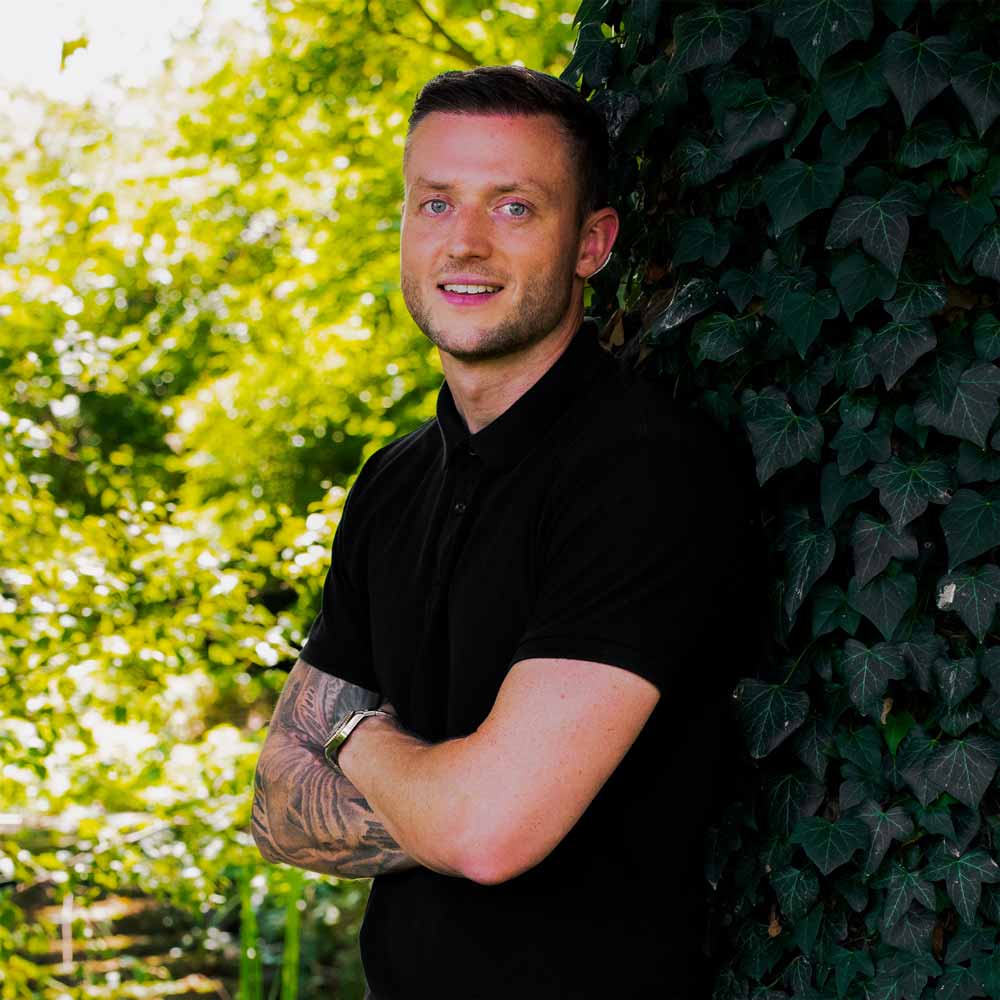
Dr. Gaétan Chevalier is a physicist and researcher specialising in grounding (earthing) science. He has been studying the physiological effects of grounding since 2003 at the California Institute for Human Science, where he has published multiple peer-reviewed papers investigating its impact on inflammation, circulation, sleep and stress physiology. Dr. Chevalier is also the Director of the Earthing Institute, an organisation dedicated to advancing research and education around grounding. His work focuses on understanding the electrical relationship between the human body and the Earth, and how reconnecting with the planet’s natural electron supply may influence biological systems.
Earthing Institute: https://earthinginstitute.net/

Meet Our Host - Andy Smith
Andy Smith is the founder of NewMed and CELLER8, and the driving force behind The PEMF Podcast. After more than a decade working at the forefront of Pulsed Electromagnetic Field (PEMF) therapy, Andy wanted to create a space that went beyond marketing, somewhere to explore the real conversations happening in wellness, longevity, and recovery. His passion for the podcast comes from years of seeing how much confusion and curiosity surrounds new technologies like PEMF. Through open, science-led discussions with researchers, athletes, and innovators, Andy aims to make complex topics accessible helping listeners understand what’s hype, what’s real, and how these tools can support a balanced approach to better health and performance.
The Audio
Prefer to tune in on the go? The PEMF Podcast is available on all major audio platforms, including Spotify, Apple Podcasts, and Google Podcasts. See all here.
The Video
Catch the full conversation with Dr Gaetan Chevalier PhD over on our YouTube channel. Subscribe to The PEMF Podcast to see every new episode as it drops, along with behind-the-scenes clips and highlights.
The Transcript
Andy Smith 00:00
This episode is bought to you by Monk. Creators are the most transformative two minutes of your day. I've been using Munk Ice bath for a few months now and I've got to say it is a game changer. It's not just about cold it's about control. Two minutes in the plunge and I'm clearer, calmer and way more focused. What I love is how well built it is. Monk's ice bath are self-cleaning with ozone, precision cooled to three degrees and designed to actually look good whether it's in your home studio or wellness center. Plus the Monk app guides you through every plunge safely and effectively with programs tailored for things like anxiety, muscle recovery, morning activation, even hormone-aware guidance for women. What's interesting is how well it stacks of PEMF and red light. A plunge first activate the nervous system then follow with PEMF and red light to support deeper recovery. It's become a daily ritual, stresses system then restore it. Munk are on a mission to help more people become wildly resilient and turn stress into strength. You can get 10% off with the code PEMFPOD at discovermonk.com. Highly recommend and I need to get out of here. This is so cold!
If you're using PEMF therapy you already understand the power of optimizing your body's natural signals to bring your body back to balance. But here's a question most people don't ask. Do you have enough stem cells in circulation available to respond to signals? Stem cells are a body's natural repair system. They repair every organ and tissue in the body on a daily basis. Stemregen release supports the body's innate repair system by helping release more of your own stem cells from your bone marrow so they're available when your body needs them most. PEMF helps create an environment that supports cellular communication and circulation. Stem regen release helps ensure that there are more stem cells in circulation ready to respond. It's not a drug, it's not an injection, it's a science-backed nature-powered way to support how your body is designed to repair and renew itself. PEMF sets the signal. Stem regen release helps supply the components needed for repair. More of your own stem cells. If you want to support all aspects of repair, head over to stemregen.co and use the code PEMFPOD to get 20% off your next purchase. This offer is only available for US customers. A quick disclaimer before we begin. The PEMF podcast does not contain any medical advice and the content provided is for informational purposes only. If you have any health concerns, please visit a healthcare professional.
Welcome back to the PEMF podcast. Today we're diving into one of the most talked about and often most misunderstood areas that is exploding in health and wellness at the moment, which is grounding, also known as earthing. We're joined by Dr. Gaetan Chevalier, a physicist and researcher who began studying earthing in 2003 at the California Institute for Human Science. He is director of the Earthing Institute where he has led and contributed to several published studies exploring groundings potential effects on blood flow, inflammation, the autonomic nervous system and more. Gaetan, welcome to the podcast.
Dr. Gaétan Chevalier 03:23
Thank you, Andy, for having me.
Andy Smith 03:25
With a background in engineering physics and biomagnetics Dr. Chevalier brings a technical and scientific lens to a topic that is often discussed in very broad terms. In this episode we'll break down what grounding actually is, what the research says, how grounding products work and how it compares or contrasts with PEMF. So let's start with the basics. What is the correct term? Because we often hear it either grounding or earthing. Is there a difference or are they kind of interchangeable?
Dr. Gaétan Chevalier 03:58
So, um, Clint decided to use the word earthing for a person who is grounded or is in meaning the person who is in physical contact with the ear. So the term used, for example, in electronics is you're grounding your electronic systems. But in England, apparently, the term earthing is used. And so Clint says maybe we can use this term to differentiate a little bit, especially for the American people, between grounding in the electronic system or electrical systems, you know, that power houses versus grounding a person. So technically, there's no difference. If the context is correct, and we, the person knows what we're talking about, that we're talking about grounding a person, then the word grounding can be used and is often used. For example, we have a Facebook group and people use grounding all the time, but it is clear that we're talking about, you know, earthing about the benefits of being in contact with the Earth.
Andy Smith 05:08
Yeah, good. Thank you for that. That's, that's cleared up that debate from from start to finish. So for someone who's never heard of either grounding or earthing, can you just give us, you know, start right at the beginning? What actually is it? And how do you ground?
Dr. Gaétan Chevalier 05:25
So basically we evolve just like other animals in the world, we evolve in contact with the earth. So for millions and millions of years, life on earth has evolved, especially animals have evolved on earth in contact with the earth. And so what happens is that the physiology of, especially mammals, they are better at that. They evolve a system by which they can use the energy of the earth to protect themselves. So we evolve in contact with the earth and because of that we develop a system that is called the immune system, which takes advantage of our contact with the earth. And what is the advantage of being in contact with the earth is that the earth is a battery and it recharges us. You know, a battery has two poles, positive pole and negative pole. Well, the earth is the same. The negative pole is the surface of the earth and the positive pole is the ionosphere, which is a layer of the atmosphere that protects us against UV light from the sun. But at the same time, it serves as the positive pole of the battery that the earth is. So by touching the earth, we're receiving electrons from the earth. Among other things, there's frequencies and it's more complex, but basically you receive electrons from the earth. These electrons are used to do at least two very, very important things. One is to help the immune system to be in control because the immune system use acid's positive charge to kill bacteria and then it has to be neutralized. That's what the electrons do. The second one is that our energy, every cell as inside themselves, organelles that are called mitochondria. These are very important because they are the energy production of the cells. And so to produce this energy efficiently, they need oxygen that we breathe, but we need also electrons from the earth. So by combining the two, they produce a molecule that is called ATP, adenosine 3-phosphate, that is actually like the gas for a car. That's where this molecule is used by all the cells to power themselves.
Andy Smith 08:05
Sorry
Dr. Gaétan Chevalier 08:06
Is that answering correctly your question or do you have one question?
Andy Smith 08:11
Yeah, yeah, no, I think that makes sense. So, you know, you're talking about the what it is and effectively how we would ground. So, just to help with that answer, I'll take you back to my first experience of grounding, probably not my first actual grounding because I've been grounding my whole life. But when I was actually aware of it, I was on a trip with a work colleague and I've always been into my health. But we were driving for like eight hours and we stopped a gas station or a petrol station as we call it in the UK. And first thing he did was he took his shoes off, he jumped out of the van and he put his feet on the grass. And we always thought, you know, this colleague was into his complimentary health and all that sort of thing. And I thought, oh, God, here he is. Here he goes again. You know, his name is Damien. He put his feet on the grass and he walked across the grass and we're sort of like, what are you doing now? And he then introduced us to, you know, this grounding. And he explained it a little bit like he did about connecting himself back to the earth. And for him, his concept of it was putting his feet onto the grass. So, my question for you really is, where can you ground? And is it only grass or soil, for example, you have to connect your feet to, to affect if you get a good ground?
Dr. Gaétan Chevalier 09:37
No, not only the grass is very good, especially in the morning when they do, you know, when it's wet, being in the ocean is the best way, actually, because you're grounding the whole body. The ocean is salt water, which is conductive. So when you are grounded, you know, in the ocean, all the body receive electrons from all parts. You can walk barefoot on dry soil. And also, since we're talking about conductivity, this is about electrical conductivity. So that's why you can use, for example, a rod planted in the soil, have a copper wire run into your home, and have a conducting grounding mat, and put your feet on that. You still get the electrons from the earth, because we're talking about electrical conductivity here, and we're receiving those electrons. So other materials that are conducting normally are, for example, concrete, when it's direct in contact with the earth. But asphalt is not conducting. Wood is not conducting. Rubber, plastic, all these things that we're always, you know, in, like houses made of wood, the cars that are rubber tires, our shoes that are made of rubber, and plastic. All of these isolate us from the ground.
Andy Smith 11:18
No, good. So when we talk about PEMF, we talk about energy being delivered via induction, and you've just mentioned that with grounding, it's more about the electrons or the neutrons that are going into the body. But how far into the body do these electrons realistically travel? So you mentioned about jumping in the sea and it's covering the whole body, and I've heard that the best way to ground is to jump in the sea or in the body of water. But if we're just putting our feet onto the ground, are these electrons realistically travelling throughout the whole body, or is it just affecting our feet?
Dr. Gaétan Chevalier 11:56
No, no, it's just straddling all the body. That's why we're designed, you know, to we have in the feet, we have more nerve termination per square centimeter, but anywhere in the body. Why is that? It's because the feet are made to absorb the electrons from the earth. And then they transfer that into the whole body. And we have several theories for that, but we know that they do because they will, for example, you put, let's say you have information of the knee. So, the electrons from the feet will go to the knee and quench inflammation, which we've seen many times, we've done research on that. And it will do us the same thing with the whole body. We know that it takes time for the electrons to move up. And so we know that, so there are transport mechanisms. And, and we have a researcher named James Oschman, who has published about three papers with explanation of possible mechanisms, why, how the electrons are transported in the body. And we know also that they are stored in the body or used later. So we're like, you know, a battery ourselves. You know, we need to be recharged. And that's, it's like our recharging station is the earth. So we know that we store the electrons and we've done some experiment for that. I don't know if I need to get into that, but we do know that we store electrons and James Oschman, I explained several mechanism, how the electrons can be stored also in the body and distributed. He has something called, you know, the, the, the, the, the, the body electrical matrix where everything is distributed. So it's, it's a very interesting thing that the, you know, medical science has not paid in the past attention too much to, you know, interstitial tissue. But modern science is taking more and more notice that the interstitial tissue play a vital role into the body working properly. The living matrix. That's how we call it the living matrix. So you can, you can, uh, so, so those are interested, you can go on our website, everything, institute.net and find Jim Ashman papers there. And if they want to dive into the explanation of the physiology of how the electrons come in and what the body does with them, he has the most detailed explanations.
Andy Smith 14:47
And we talk about it quite a lot on this podcast, like, um, yeah, we, when we were referencing PEMF and grounding, um, people that are going a holiday, you know, you're spending a lot of time on the beach and you're in the sea, so effectively they're going to, you mentioned about, you know, it's like a recharge of the body. And so a lot of people can feel quite relaxed and quite, you know, beneficial when they come back from holiday and completely the opposite. When, you know, we go through the winter months, especially in the UK, we're in our houses, we've got our shoes on, clothes on, in cars all the time. And, you know, people, people's health takes a bit of a toll, but when it comes back to the grounding, can people actually test if they're grounded properly? No, is there, is there some kind of method of testing that somebody is grounded?
Dr. Gaétan Chevalier 15:32
Yes, there is. And we have a paper on, again, the research section of the Earthing Institute where I wrote a paper on how to test if you can, if you are grounded. There's two ways. One way is using a multimeter or voltmeter to measure the voltage on your body.
Andy Smith 15:52
Mm-hmm
Dr. Gaétan Chevalier 15:53
That's the more precise way where you can see at which point how well grounded you are. The other one is that companies sell continuity or product testers where you can test if you are grounded just by connecting it properly as the manufacturer wants you to do. You put your finger on there and there's a green light that comes up if you are grounded. This is a very easy way to know if you are grounded or not. So yes, there are two relatively easy ways. Of course, if you buy the continuity tester, it's kind of easy, but the continuity tester itself has to be grounded properly itself so that you can check if your body is grounded properly. So yes, it's possible. It's not difficult.
Andy Smith 16:51
Good. And before we go deeper into the science, what's happening inside the body when someone is actually like earthing or grounding, can you tell us a bit about your background and how you became involved in grounding research? It's a strange thing to be involved in, essentially.
Dr. Gaétan Chevalier 17:08
Yeah, it's something I've never imagined I would do actually, because I have a PhD in engineering physics from the University of Montreal with specialty in plasma physics and laser spectroscopy. And so I went into after I finished my PhD, I went to work for the largest nuclear fusion device in Canada called the tokamak, tokamak, the variant, the city. So I started working in nuclear fusion as a specialist in analyzing the light spectroscopy so that we can see which elements are in the plasma. That brought me to UCLA. After that, I got a position at UCLA in a lab where we were testing the effect because you see, the plasma that is generated in nuclear fusion is very, very hot. They're trying to reproduce the nuclear fusion that happens inside the sun. That needs 10 million degrees just to start it, extremely hot. So that means that nothing can touch that. So they make a donut-shaped device that is in the plasma is controlled by magnetic fields so that it doesn't touch nothing. But anything that goes in there, they use very light gas, isotope of hydrogen. That's what the sun uses. It uses two isotopes of hydrogen fused in together and that gives a lot of energy. So that's what they're trying to do in nuclear fusion. The problem is that it has to be inside this donut-shaped thing and you have to make certain that it's stable and it's not touching the wall. My specialty was to see the elements that were inside the plasma so that we don't have heavy elements coming from the wall. If it touched the wall, then it will evaporate immediately, go into the plasma and cool it off. So I was a specialist in analyzing the plasma. So that's and interestingly, when I was there, I always was interested in yoga and spirituality and different things. And it just happened that one of my colleagues shows me a magazine with an article by a Shinto priest and a PhD researcher in Japan, Dr. Hiroshi Motoyama. And he was talking about how he was trying to study the meridian system and he has a fairly cage and he had like a light detector and all of these things. I thought that was interesting. So I wrote in Japan and they responded that Dr. Motoyama was coming to America to actually very close to, I was living in Los Angeles at that time because I was working at UCLA. And he was coming close in Santa Monica. So I met him and I did not understand exactly what he was talking about. His accent was unfamiliar to me. But I went to him after that and he told me, I'm starting a school in Encinitas. That's where I am right now. And so I wanted to do research in that. So would you be interested in teaching basic physics of electricity and magnetism to my students? So I said, yes, sure. So I start teaching. And then he offered me a full-time position in his school. And that was a leap, a very big leap, because now I'm going from studying in a class of music in neurofusions, going to study meridian system in chakras. That was back in 93 and I was like, well, you know, I know it's neuroscience now or everything, but it's so interesting. So I did it. And so working so many years there, then I met then Edson one day.
Dr. Gaétan Chevalier 21:16
Clint Ober showed up. I was director of research at the time. And he talked about, it was like 2002, something like that. He talked about the only basic research that was done at the time, which he did with a nurse. And it was just like, you know, paper and pencils things, you know, like psychological tests and tests to monitor how the people feel. And so he made some kind of equipment, grounding equipment that people, you know, and people slept grounded. And he found out that they were sleeping better, they have more energy, the better concentration, all that stuff. And I was watching that. And I said, just by good. I was skeptical. I must say, I said, you know, just by touching the ground, you have all these benefits. I thought, well, it would have been discovered 100 years ago if it was true. Actually, later, I found out that it was discovered in Germany. But that's another story. So at the time, I didn't, I didn't pay attention. I did nothing. And but one of the associates of Clint over came to me and said, we would like, you know, we're to pay for a research project that you would do to show that everything really does something. And I said, fine. So we did a research project. And we get good results. The grounding people that their, their stress went down, the muscle tension, relax, they felt, you know, more positive, and we had a bunch of positive reaction. I was still a bit skeptical, because the system we were using was grounded itself. And I when I was doing my PhD, we had tons of equipment. And if they were grounding by differences place, it wouldn't work. He asked all to be grounded at one point, they were so sensitive. So I was just wondering if there's not a ground loop there, that that would make it look like, you know, we had good results. So sometime later, we did replicate the same study with equipment that was not grounded, battery powered. And we got really good, really good results. Two of my friend participated who had really real problems with arthritis in the hands. They got good results. So, so it took about two years, but then I got convinced and what not. But once I'm convinced, it's the opposite. I'm really hard to not come with this to go back. So I'm since then, you know, I've been doing more research project has been more and more and more often for all kind of conditions is pretty amazing. We have hundreds of testimonials of all kinds of conditions. But you see, they're all inflammation based. And everything kills inflammation. So now we have more explanation understanding better, you know, why it's so effective for so many different diseases.
Andy Smith 24:28
And we thank you for doing that research way back then, you know, when it's very, very rural or pseudoscience, you know, it's, um, but it's great that, you know, people are able to get hold of this and actually show the scientific benefits of it. So, you know, it's amazing work. Uh, we've got a little bit of a quick fire section that we do on this podcast. So what I'll do is I'll ask you some quick fire questions and then you just give us a short answer and then at the end we'll kind of take a deeper dive into those. Okay. So I'll ask those for you quickly. Um, what's better grounding on soil or grounding on sheets?
Dr. Gaétan Chevalier 25:04
Always soil is best.
Andy Smith 25:05
What is the biggest benefits of grounding?
Dr. Gaétan Chevalier 25:08
I would say, quenching inflammation.
Andy Smith 25:12
Can you only ground on soil on grass?
Dr. Gaétan Chevalier 25:14
No, you can, you can, you know, uh, we'll explain that later.
Andy Smith 25:20
Do grounding sheet, do grounding bed sheets work?
Dr. Gaétan Chevalier 25:24
Yes, again, with more explanation.
Andy Smith 25:28
How long does someone need to be grounded to see measurable changes?
Dr. Gaétan Chevalier 25:33
At least 30 minutes.
Andy Smith 25:35
Does grounding protect against Wi-Fi or 5G exposure?
Dr. Gaétan Chevalier 25:39
Not directly. No, not directly. But again, I have some explanations.
Andy Smith 25:43
Is grounding beneficial for everybody?
Dr. Gaétan Chevalier 25:44
Yes
Andy Smith 25:45
Biggest misconception about grounding?
Dr. Gaétan Chevalier 25:48
Biggest misconception is that you cannot ground when you are inside a house because you have all these EMF that you will attract and will go through you and get to the ground and you'll be zapped. Worst misconception ever.
Andy Smith 26:04
Cool. All right. We'll expand on those anyway. Yeah. So just talking about a little bit about the science again. So in blood in your blood viscosity research, what exactly changed when participants were grounded?
Dr. Gaétan Chevalier 26:16
So what really changed and changed actually the blood viscosity is the electric charge on the red blood cells. So what we found is that by grounding people, the red blood cells become negatively charged much more than they are normal and they are when people are not grounded. I'm not saying normally, I retract that word because the normal is to be grounded, but today is we reverse that. But it's a new normal. Yeah. So because they have this increased charge, which are electrons, like more electrons, they repel each other now. They are distributed into the blood and not cloned together like they are in most people because they don't have enough charge. You see, I don't know if I should go in there, but you'll stop me if I'm going to technical. But you see, blood is a liquid with floating particles in there. OK. And just like milk, for example, or to give you an example. And these particles float inside because there is an electric charge inside like the milk, for example, if you put an acid into milk, OK, it's a colloidal solution. So colloidal solutions are solutions with particles that are transported inside. The milk is the same. If you put acid into milk, you will see that there will be a formation of, you know, coagulation of some particle and some things. And that is what later will become cheese or become some people use that. And so there's a whole field called rheology where they manipulate the particles inside, you know, fluids, like, for example, sewer, the cities have a big system that is based on this knowledge to control and get rid of all the bad stuff in the water. But the blood is the same. It needs to have electric charge on the red blood cells so that they repel each other. And the blood is more like Dr. Sinatra said, more like wine, not like, you know, like ketchup. And that has an implication of the entire cardiovascular system. But imagine that your heart has to push through the system something at the consistency of ketchup. It's going to tire. You're going to have your heart problems, heart attacks and all kinds of things like that. So so it's very important to have a blood that has a very thin so that the heart can pump really easily the blood through the body.
Andy Smith 29:29
Yeah, and for those avid listeners of the podcast, you know, just to summarize that we often talk about blood viscosity and the thick clumpiness of the blood, which you've just been describing. When you apply a PEMF device, you can see the cells under a dark field microscope separating, that gives you thinner blood, it's able to carry more oxygen, it's better for reducing information, that sort of thing. So these are the similar effects that were happening with grounding and that you were seeing in your research. But there's something else that we found when we're researching for this episode called zeta potential. Can you kind of just in simple terms explain what that is?
Dr. Gaétan Chevalier 30:05
Does Zeta potentially?
Andy Smith 30:07
That's the one.
Dr. Gaétan Chevalier 30:12
See, when you have charge accumulating someplace, you have also a potential that is built up in the electric potential. Like for example, in our home, well at least in America, I think in England is different, but the electric potential is 120 volts. That's kind of like the energy that there is in there. I think it's 240 volts in England, isn't it?
Andy Smith 30:48
Yeah, yeah.
Dr. Gaétan Chevalier 30:49
So similarly, the zeta potential is involved also is a measure of how much energy that the cell, electrical energy that the cell has. So the more electrons, the more, of course, electrical energy, and the zeta potential then is a way that is used in rheology to measure objectively and easily how much charge there is. It's not, I cannot go, you know, and I don't have like small electrodes going right there, measure one blood cell and say, how much charge there is on there? I can't do that. But I can put an electric field and see how the electric, the red blood cell move in the electric field. And from that I can deduct how much, how much electrons are on the cells. That's what I did in one of the paper. Okay, there's an equation that has been developed by researchers before that. So I can measure the zeta potential, but I cannot go and say, okay, you see how small the red blood cells are, it's impossible. So that's one way to measure indirectly the electric charge on the red blood cells.
Andy Smith 32:06
No, good, okay. And when it comes to the inflammatory markers, have they actually been measured and were these like accrue, acute or chronic changes to the markers?
Dr. Gaétan Chevalier 32:16
Yes, so inflammation markers. Yes, we use several in our research. C-reactive protein is one of the best ones. Okay, with interleukin 6 and TNF alpha, there's many of them. And we use them in our paper to measure the difference in inflammation in the body. If you are interested, we did research with massage therapists to see how grounding, because massage therapists wear out very quickly. I mean, they have to be very cautious. Most massage therapists, if they're due too many things, and it happens to many people per day, they just burn out within normally typically five years. So in the center where we're going, there were an MD that was on there to watch the massage therapist and said, you have to work enough today, you have to go home. So what we found is that by being grounded, the massage therapist were able to work on twice as many people without being tired as much. So because I think what happens is that when you do massage on people, you have sore people, negative energy people. So if you do your massage when you're grounded, makes a big difference. And that's what we have papers on that.
Andy Smith 33:48
And how would someone do that? That's quite interesting. Would they put like a grounding sheet across the floor that they're working around like I just try to envision someone with a massage table, shoes off, grounding sheet?
Dr. Gaétan Chevalier 33:59
Yeah, so the easiest there's two ways. One ways is to have a grounding mat on the table and have the patients on touching that grounding mat. So the patient is grounded and then when the massage therapist does manipulations, then the massage therapist gets grounded itself, especially. So we need also best ways actually to also use a grounding mat on the floor. In the project that we have done, we had people massage therapist barefoot on large grounding mats like similar to ESD mat, electrostatic discharge mat industry. There's a whole industry of mats to help workers in the electrical electricity not to zap their electrical circuits and stuff like that. So to discharge their static electricity. So yeah, there's a lot of mats out there that are using and they're pretty, how can I say that? They can last pretty long. Where the problem comes is in the bedsheets. And these are where what was found is that these they use silver threads inside the sheets. And these were out within a year. So that's why you still have companies selling that, but less and less. And I know Clint Over personally, the person who started the earthing craze that we are in right now. And he himself started having sheets like this. And I still have some, but they don't last very long. So now he's coming up with a new sheet soon at earthing.com where they tested it for a long period of time and they wash them a lot. And it's a washing that actually destroyed the sheet. So they said that it will last much longer. So we'll see. But for the moment, personally myself, I use a grounding mat in my made for, I have a king size bed, so made for king size. And I have a sheet on top of that. One of the, at one time, there were some sheets that were conducting that were not like the normal bedsheets. They were made to work with mats and they were more. So I use some of them and I check all the time with the continuity tester if I'm grounded or not. Because at some point, if they're not grounding, I'm going to get some more or do something different. I just cannot sleep directly on the rubber-like structure. But the other thing is that even if you use a cotton sheet, if it's thin and your bare skin is touching that cotton sheet, after about 10-15 minutes, if you use a detector, you will find that you are grounded because we perspire. We don't think we do, but we do perspire every night, almost everybody. I don't know if it's not normal.
Andy Smith 37:33
So we'll come on to the products and the sheets and the earthing products like in in a couple of minutes. Just want a couple more questions on the kind of science behind it with your research. You mentioned before about like half an hour before there was changes that were actually measured. So how long generally are participants in the research grounded before changes were actually seen?
Dr. Gaétan Chevalier 37:58
Well, that's that's why we say 30 minutes because we we tested, you know, in a research project with lots of equipment, what changes happen that would signify a change in metabolism function of the body. And so we found out that it takes about 30 minutes. For example, if you have inflammation in the body, someplace like inflammation of, I don't know, elbow or something. So it may, it may take up to about 30 minutes for the inflammation to really go away, especially acute inflammation. We've done research mainly with knees. Lots of people have knees problem, inflammation of the knees. And so we took some of the people, we ground them. And we found out that it takes about 30 minutes for the inflammation to go away. Then we have another project where we did all these physiological measurement. We, we measure skin conductance, we measure heart rate variability, measure a bunch of stuff. And we found that it changed also blood rejuvenation. All of these things, they change within about 30 minutes on most people.
Andy Smith 39:15
So a lot of, um, like specifically by hackers or health optimizers, they will, you know, put 10 minutes, 20 minutes aside to go downstairs in the morning. They'll go out to the grass. They put their feet on the grass. They get morning light. Is that 10 minutes of grounding going to be too beneficial or
Dr. Gaétan Chevalier 39:33
Because some of the electrons are coming in, but you will not measure physiological changes yet. It's not enough electrons coming in, but we have the benefits. If you do that like 20 times a day, you're still going to be really probably okay. We haven't tested that actually, by the way, but 20 minutes, a lot of people respond in 20 minutes. Not everybody, but if you're a pretty healthy person, your buddy will respond in 20 minutes. So if you have a biohacker, for example, and you're only pretty relatively healthy, your 20 minutes might be okay.
Andy Smith 40:10
Yeah, I mean, you know, we're in the UK. So 10 minutes is is is quite a long time for us in sub-zero temperatures or rain. So we've got to find new ways to ground, which we'll come to. Cortisol is a is a quite hot topic at the moment is have you seen any patterns in cortisol reduction in in, you know, improving or anything like that with with grounding?
Dr. Gaétan Chevalier 40:36
Yes, we have actually a research project that was done, one of the first one in 2004 by Dr. Galli, will show that you don't have increase or decrease. At first, if you look at increase and decrease, it looks like this makes no sense. But what we found is that what happens when a person is grounded is the secretion of cortisol gets synchronized with the rhythms of the day. So it gets back to the normal, you'll have more at the period you need more and you have less in the period that you need less. And if for those who are interested, you can more detail, you can look at the paper by Dr. Galli and Tiplets there. But it's a normalization. So people, people have difficulty sleeping because they don't have the right level at the right moment because the stress is too high in all of these things. We found everything calms the autonomic nervous system, it calms the body right there within the second, the body says, there's a big difference happening. It's amazing, the difference between the body when we're grounded and not grounded. Because I mean, we've seen that when a person, people living in ungrounded states, their body's under tension, and you don't know that because you live like that all their lives. But when the body gets grounded within a second or two, there's a relaxation of the entire body. Okay, the physiology changed completely. Now, an example, when a person is not grounded, we measured attention in the muscle, for example, the physio's muscle, tension on most people is high. Some of them are so depleted in their G that it's low. It's not the proper tension. And it stays there. When people are grounded, the tension normalize. And we see something amazing is that the muscle contracts and relax every 40 seconds very, very slowly. That's the way the autonomic nervous system determines the tension in the muscles. But when we are not grounded, it gives up on that. Oh, we are in a stress mode. So we can't do that. We're busy preserving the function of the internal organs. This function gets away. Another thing also is the control of the circulation of blood in the face. So when people are grounded, their face gets more blood. And so it helps repair the skin. Again, we found some kind of a cycle in the blood, like about 40 seconds. Again, more blood, less blood. It's like the body now is sensing and controlling how much blood is needed where this function is given up.
Andy Smith 43:37
It's good points to make because, you know, we say the same thing with PEMF like so, you know, where we talked about this, this question at the beginning was about cortisol and, you know, how grounding can help lower cortisol. But actually someone might say, Oh, well, I have a significantly low cortisol. So I can't ground or I can't use PEMF, but actually it's all about regulation. It's all about getting the body processing cortisol or, or things correctly, you know, so again, with, with thin blood, you know, it's not like grounding or PEMF is going to even further in the blood, it's going to help regulate the blood. So it's, it's a, it's a good point to make. Um, one more thing on, on the kind of science behind it and the benefits of grounding is, is, is there evidence that exists that grounding reduces pain? It's something that we kind of get questioned from quite a lot. Is there kind of studies or evidence based to back the pain theory up?
Dr. Gaétan Chevalier 44:28
Yes, we have studies where people were induced some kind of muscle injury. It was done by a researcher specializing in sports research. And what he found is that the other way to do some damage, minor damage to the calf muscles, you know, by having people doing certain exercise. And so we were able to measure, like, for example, their damage of the muscles, there is a special protein molecule that is released that we can we can see that there's more damage. What we found is first is that people are grounded, have less damage to their muscle. And also what they did is they put a calf around the muscle and increase the pressure. What they found is that the people were grounded were able to support better pain than a higher level of pressure and pain than people are not grounded. The second another project that was done by Clint at the beginning is that one of the question is that about how is your pain? And people were saying, you know, that they were much less pain, the pain goes down or disappear completely when you're grounded, especially acute inflammatory pain, you know, these responses, you put a patch, the patch are really amazing because the patches are the best way to to ground locally, because they have a conducting gel in there. And it's it's a very low resistance, lots of electrons coming really easily. So if you have an elbow inflammation, put a patch there within five minutes, it goes away. There's there's been a research done. And it's on our website also on cyclists of the Tour de France. And there was a chiropractor who was using earthing to help the people get healed faster with injury. There was one of the cyclists who got an injury of the arm because there was a car and the car stopped and bumped into the car and got an injury of the glass. And the doctor said he's out. And the chiropractor said give me 24 hours. I think I can bring him back. And he put patches all around. Have the person as a guy sleep all night with within a sheet. It was like a plus having all the patches all around. Within 24 hours. There was an amazing healing. And the doctor said, Okay, let him go. So he was able to continue. This isn't the earthing book. We also have more detail on that. Because his name and audio videos from Jeff Spencer was a chiropractor who was using that. So yes, there's a lot of evidence that pain is decreased. We have also many testimonials of people pain. One is very that can send me to one point that the person was so much in pain. And she said, I don't know how long more I can live like this. And so then I found her thing I found her thing. The pain goes away so much that now I have my life back. So in clean said to me, this is what I'm doing. Because he said as he doesn't need this to live. He does that to help the people.
Andy Smith 48:20
You know, we mentioned that a lot on this podcast is the, you know, the feeling you get from those sorts of responses and from customer feedback. It's, it's always a benefit, you know, in terms of being in business, but also the, you know, what we're doing to help a lot of people, especially when they're in pain. Um, let's talk about, we, we touched on it a little bit earlier, but let's, let's talk about grounding products because, you know, now we've kind of know what grounding is and the science behind it. How can we implement grounding into our lives? So, um, it's getting more and more popular at the moment and you know, what, what's actually in these sheets that make them a grounding product? Um, and does that differ? Are they, are they, you know, different materials? Cause, uh, I've been approached a couple of times with a couple of different grounding companies, um, saying, Oh, we use this material because it's better. Um, is, is there a variation and what's your opinions the best?
Dr. Gaétan Chevalier 49:12
Okay, first I want to do a disclaimer, because the Earthing Institute does not sell any Earthing products to ground you. Okay, we have a certification course that we sell for people who want to know more. And the first level is about all the products, but we don't sell the products. The confusion comes because there's a company on Amazon who sell the product, a Chinese company who sells projects under the name, the Earthing Institute. That's not us. Okay, so disclaimer, because I get that a lot. Now, the products, there's various different products, there's at least 100 companies selling Earthing products right now. So there are various methods. One of the methods like, for example, for the mats, you know, like the letter type mats, most of the company, what they do is they take a, it's called polyethylene, and they put carbon fibers in there. The carbon fibers are conducting and make it, this material, which is normally not conducting, make it conducting. You have the sheets also that are, like I said, silver treads that are weaved in there. They're still sold. The problem, there's two problems with them is one, when you wash them, you know, they wear out the detergent, you have to be careful not to use hot water, not to use, like, some strong, you know, products to, to wash, you know, like soft, so no, and now I'm blocking out the name, you know, that people put in there. So don't put any, any strong detergent or things like that. No, no hot water, less longer. The other part is that people sweat, and the sweat has salts in them, and it's also, you know, so by still with that, it's gonna, has an effect on the, on the, on the silver. Some other people have used other materials. I've seen some people making some kind of mats out of copper, some other using stainless steel, but they're not very, they're on the market. You can find them. I have, I'm using a soft tissue thing for the night, you know, to ground my head some time, or like, for example, you can, you can see also bed, bed pillowcase made of a silvery material, you know.
Andy Smith 52:17
Yeah, yeah.
Dr. Gaétan Chevalier 52:18
I have not tested it. I don't know how long that day lasts, you know.
Andy Smith 52:22
And do you have to have direct skin contact to the bedsheets for example, is that important or can you wear, you know, people wear jim jams to bed or can you put a sheet over the top?
Dr. Gaétan Chevalier 52:33
You can put a sheet made of natural material like cotton or
Andy Smith 52:40
Okay, so it's important to use a cotton sheet?
Dr. Gaétan Chevalier 52:43
Cotton sheet or bamboo has to be 10. And as I said, be patient, it will take 10 to 15 minutes for the grounding to happen, but it will happen sometime in five minutes. There's a video by a doctor who showed that by putting his hand on a sheet like this and measuring the grounding, the grounding happened within five minutes, just putting his hand there. So it if you have a pajama or a thicker thing, you know, it might not happen, but all you need is you have one part of your body touching. You can have pajama all over, but have like part of the legs that are, have the skin touching, you know, the grounding sheet and you're grounded. And because you're grounded eight hours, the electrons will go everywhere.
Andy Smith 53:37
Yeah, yeah, sure. We see two different types as well. Most commonly you've got the ones that kind of like you dangle out the window on a rope and, and stick it into the ground. So like a rod that sticks into the ground that's connected to it. Or you have the ones that you plug into the wall outlet. So in your opinion, is one better than the other?
Dr. Gaétan Chevalier 53:57
Well, first is that the same project themselves can be used either way. Okay. They're the same connector and thing. Now using the ground outside, uh, um, uh, avoid some problems, uh, that are possible. Personally, because I know what I'm doing, I'm grounding to the, uh, grounding system of the house and I've been doing that for at least 15 years, no problem. So it works, but you have to have a few things, especially in the U S. And I'm not sure if it's true in the UK, but in the U S, um, the, the, uh, you who, so they added in the late sixties, they added a grounding system because people were electrocuted. So now every appliance, especially in the kitchen, especially like a doser, for example, they have a grounding wire because, uh, a third grounding. Uh, grounding prone because of to protect against that when I was young, it was only two slit, two, two slit. And then, and then you put the thing is that it wasn't a grounding, but now they do have the grounding system. It's a very good grounding system by itself because they have several rods that are inside the ground and everything. The problems happen when first is that in the U S for security reasons, the neutral, so, so when the power comes in, there's a wire that delivers the power in, and then it returned out to the, uh, you know, electrical station. So you have a, that's why we always have two pins or two wire. One is coming in energy coming in and coming out. So one, the coming in is the live wire coming out is the neutral. We call that the neutral wire. So, and then you have a third wire now that is, uh, technically totally separate from the other two. They don't touch, they don't, you know, and it's a grounding system. The only thing happened in the U S is that the, the connect, the grounding and neutral at the entrance of the, of the, the power grid, the panel where the electricity coming. So what that creates even, but then you have a good ground. So that brings the potential very low, but what it does, it, it keeps the potential on the, on the grounding. Why you're very small, like half a volt or point one volt. It's not a problem. I've done that for a long time. But people are electro hypersensitive. They will sense that a little voltage, even though it's not dangerous and everything it's annoying as they feel a buzz. So for these people, they cannot at all use the grounding system of house, at least in the U S I don't know if it's the same in England. I have not checked. So these people need a grounding rod outside for me, it's not a problem. You know, for healthy or relatively healthy people, even in people who are not so healthy, but they're not electro hypersensitive, they will benefit for being grounded in the house. But sometimes also what they do is that, uh, the electrician or when they build a house, they connect the grounding system, the grounding wire and the neutral at many places, then that makes the system, the grounding system. It's still grounding, but there's too much of all tension. It's not healthy. So you should not use that. So that's the problem that people are in. That's why some people feel a buzz and things like that. Because their, their, their system in their house, you know, the grounding system is not connected properly. If it's most of the modern house, let's say build after year 2000 are pretty much done correctly, but it's even then, you know, there might be a problem. It's if you, if you know a bit of electricity, it's easy to check if your system work, because first.
Andy Smith 58:09
I was going to ask you that actually.
Dr. Gaétan Chevalier 58:10
First, most of the companies sell a little device here. You plug in to see if you have a good ground. So that's the company that Clint Ober has sell it. Gave that to everybody. But then what you have to check yourself is to check how much voltage there is on the grounding wire. And to do that is very easy. You use a ground rod outside. That's your good ground. You know it's a good ground. It's right there. And then you're using that of the ground. And then you plug, you put your meter into volt AC. And then you plug the red lead into the grounding hole. And then if you read a voltage that is more than 1 volt, 2 volt maximum, then don't use it. Because there's something wrong with the system. So it's easy, relatively easy to do if you know how to use a volt meter.
Andy Smith 59:08
No, good, that was the great expression I was going to ask you, because I've also got this like... Would you say these two things?
Dr. Gaétan Chevalier 59:12
And they're good, you're fine, unless you are, as I said, electro-hyper-sensitive.
Andy Smith 59:18
I've used this device before like an EMF detector and you can put it onto like radio frequencies and you can put it onto electric frequencies and you can put that we see a lot of people walking around their house detecting high frequency EMFs and if you put it on a grounding sheet, it should show zero is that another way of testing it or is it?
Dr. Gaétan Chevalier 59:40
It's not a good, a very good way of testing if your sheet is grounded or not, because we have EMF inside the house and what people using those device that measure EMF, that's another misconception, by the way, that's what I'm going to talk about, is that they measure the EMF around, let's say they take a small grounding mat, they measure the EMF around it when it's not grounded, it's certain X, whatever, okay, it's similar to everywhere. But when they ground it, oh, there's more there. And they say, oh my gosh, it's attracting EMF to the mat and that's very bad, no, that's not what happens, that's not what happens. What happens is when the mat is grounded, it becomes one with the earth and the same potential of the earth. So now the EMF that comes to it are reflected. So of course, if you have a mirror and it reflects, you're going to have more there. It's not because you're attracting them, it's because it's your, it's your position, you're repelling it better. The same thing, the body, you do the same thing in the body, people use an EMF meter and you're granted, that's exactly where this misconception comes. The ground, the person is, oh, there's more EMF around the person, oh, that means the person attracts EMF and now they're going to be zapped, no, it's the opposite. The body now becomes better at repulsing EMF because it's grounded, it's exactly opposite. So, I'm sorry, I'm sorry, I'm getting the next one. No, it's good, so we can talk about the products.
Andy Smith 01:01:33
Yeah, we've talked about the products as in like the grounding sheets and things. So just to wrap this section up, if you have a good ground in your house and you've got a grounding sheet on your bed, what do you think is the best option? This or going outside and grounding?
Dr. Gaétan Chevalier 01:01:52
Well, you know, for the convenience for myself, uh, I like very much sleeping grounded because I do that. And even if the grounding, you know, is because the mats are not as conducting as the earth itself. So you sell more time to get the electrons in, but it's still working very well. Within 30 minutes on a mat, we found that you still have enough electrons to quench inflammation. But what I like is that I don't have to worry about it for the rest of the day. You know, I just sleep grounded and that's it. I have enough electrons and you do that every night. You build up electrons, you get less and less sensitive to, uh, electromagnetic field, and that's the lazy way of lazy guy way of doing it.
Andy Smith 01:02:45
No, I like that.
Dr. Gaétan Chevalier 01:02:47
But I'm at my computer now, I do have using a grounding mat as a mouse pad so that my hands are grounded. I found benefits of being grounded while I'm at the computer. For some reason, when I'm at computer, you know, I get tired less quickly, I have more energy last longer, I can work longer on my computer without being tired. If I am grounded at my computer, even though I ground myself at night every night. So I still do that. I have one for my feet also. I mean, I can get all of them, you know, that's the problem. I have no problem with supply. So but it's a nice way of doing it.
Andy Smith 01:03:27
And it's important you know if we compare apples to apples laying on a grounding mat compared to laying in the grass for an hour or something we might say that laying in the grass in an hour is better but practically you know it's just not going to happen and it's the same thing that happens in the air.
Dr. Gaétan Chevalier 01:03:44
I can totally sympathize with the weather that you're not going to go out and barefoot in the winter. I mean, in Montreal, we have temperatures sometime, minus 35. If you've been there, put a feet out, it's frozen in this thing. Yeah, exactly. You get frostbite instead. That's not good health. You'd lose your toes within a minute.
Andy Smith 01:04:07
So it's important, you know, like you say, a lot of the time it's kind of bringing these natural things back into your, into your world and, you know, letting them fit into your routine is always, is always the thing that you should look at first.
Dr. Gaétan Chevalier 01:04:21
because it has to be done every day. It's like eating. You can go a few days without eating, especially if you're grounded a lot and you travel and you're not grounded a little bit, that's okay. But I still bring a mat to ground myself. But you build some kind of reservoir of electron inside yourself so that if you're grounded regularly, it's just like when you eat, you build some energy inside yourself and you can't go over a few weeks without eating. But at some point, something's going to be able to help.
Andy Smith 01:04:57
And I just want to cover some kind of myths and misconceptions when it comes to grounding and kind of bring in the PEMF as well. So we get a lot of people asking us whether PEMF and grounding are the same thing, you know, mainly because there's influencers out there that kind of call PEMF mats grounding mats a lot of the time. Are they the same and are you grounding when you're using a PEMF device in your opinion?
Dr. Gaétan Chevalier 01:05:23
Okay, no, they're not the same. They're very different. Because PEMF, like the name says, pulse electromagnetic fields, there's no electrons. It's about pulse electromagnetic fields. So what it does is that by receiving those pulse electromagnetic fields, it creates a current inside your electric field inside your body, which move charges. So that's why, for example, you can have pain in an elbow, you know, and you put the PEMF there. It's going to go away because it's distributing the positive charge. It's not cancelling them. So that's why I personally think that the best combination is PEMF plus gravity. And I've tried that, and it's the best. Because now you neutralize it, you're helping the electrons coming in, you're not. What happens normally in 30 minutes with a PEMF can happen in five or 10 minutes, because it helps the electrons moving. So no, they are synergistic, but they are different. They work from different mechanisms. Although, everything has also some frequencies, because you absorb also the frequencies of the earth. That's why, for example, if you are, I'm in California, I go to see you, I'm going to have jet lag, because you're in England. But I can prevent that by putting my feet on the earth for 30 minutes. My body not only gets electrons, you get the vibrations of the soil. And it tells me up, my body will know, oh, now it's 2pm here, okay, I'm fine reassessing, reorganizing the clocks inside so that we're in sync with the time. We've seen that over and over.
Andy Smith 01:07:12
No good, and you mentioned there about using PEMF and grounding, when you say that are you saying about using PEMF then grounding, grounding then PEMF or actually using them at the same time?
Dr. Gaétan Chevalier 01:07:24
At the same time.
Andy Smith 01:07:25
Okay.
Dr. Gaétan Chevalier 01:07:26
Same time is best.
Andy Smith 01:07:27
And how would you apply that? So you'd use a PEMF device, like a localized device, and then maybe ground your feet, or is there a practical applications you've done that you can help the audience with?
Dr. Gaétan Chevalier 01:07:38
For me, my experience is using PEMF mats, which is like, you know, have this ground loop that goes around the entire body, plus I was grounded at the same time, and it was very, very nice. So I have not used a localized PEMF device. I use only the mat with the long one, and it works on the entire body. So that was really, really nice. So, I mean, if you have pain somewhere, and you want fast relief, I mean, the patches are the best to use. But if you have a localized PEMF that you can use also, you can also use that. So you put the patch there, put the PEMF close by, and it will work fast, very fast. But you see, because the electrons are coming right in, you won't see that much of a big difference. So the whole body thing is really, I think, where the combination of the two is probably the most beneficial.
Andy Smith 01:08:49
Yeah, no, perfect. And, you know, we mentioned on this podcast, when we've talked about grounding in PEMF before, that, you know, you can get quicker results with PEMF therapy, or just quicker responses, you know, than doing grounding for, like you say, like half an hour. So, people busy lives, you know, or bringing grounding in the house, you know, it's not grounding, but doing alternatives is a good way to, you know, fit into a busy life.
Dr. Gaétan Chevalier 01:09:14
Another idea. So you say that you just have a sleeping mat in your bed and you don't have anything other, but you have like a localized PEMF device and you bang yourself somewhere and you have thing here. You can use your PEMF device. You're not home temporarily. Then when you get home at night, then the healing will be facilitated. It's still gonna be helpful.
Andy Smith 01:09:44
No, good. I think that clears that up and the differences between the two. So hearing it from, you know, expert in the field is always always helps. So there's also some thing that we found in the grounding communities that imply that grounding protects against modern EMF exposure. Is there any truth in that?
Dr. Gaétan Chevalier 01:10:05
Yes. And it's a complex subject. So, yes. So I'm going to try to break it into simple. There's, I'm going to separate that into type of emf, the high frequency emf, very high frequency emf, like microwave, cell phone, Wi Fi, Wi Fi, Bluetooth, all of those are very high frequencies. And so everything does not protect against those in the sense that they're not penetrating your body. They move too fast, the body is not able to deal with them. And so they go inside. However, when you go back to your bed and you sleep at night, the repair mechanisms will help heal faster if there's some damage. So that's for the high frequency. The low frequency ones, like the one that the 60 at 50 hertz, when you are grounded, that these are the ones who are reflected, and it can go all the way up to 100 kilohertz. So the body is able to reflect a lot of them. Okay. Including what they call dirty electricity does not penetrate the body. Okay. So that's another topic there. But the lower ones are if you're protected against the emf that you have in the house that are due to the power lines. And don't freakin see, even if you have power surge inside the lines, which is what they call dirty electricity. There's a research paper done by Polish doctors that shows that this does not penetrate.
Andy Smith 01:11:56
Mm-hmm. No, good. Okay. So, you know, seeing grounding in the future, you know, do you see grounding being used in mainstream medicine, you know, and if so, how do you think it's actually going to be integrated?
Dr. Gaétan Chevalier 01:12:10
So, yes, I see definitely that every patient in hospitality needs to be grounded. Like it's already there. You see, all the hospitals, big hospitals, they already have a special grounding system because when the doctor, the surgeon does an operation on open-arm surgery on the patient, they have to be grounded because any spark, you know, can damage the heart, you know, any electrical energy that is given to the heart and not appropriately can. So they have the system already and they already ground the people. So the doctor and the patients, when they know it's necessary, what we're saying is that it's necessary for everybody. For example, there is a research project that was done at Penn State Hospital, you know, on preemies. These are little babies who are in incubators, you know, they are premature babies. One of the problems they have is these little babies. They die of a problem that's called necrolitis enterolytus, which is kind of like a well name. But in short, it means that the intestine of these little babies dies. So the baby dies. So what was found is that a research was done, you're grounding because these incubators, I mean, there's a lot of EMF there and you can see in the paper, it's like being almost like being inside a microwave oven. I mean, not that bad, but we're close. There's full babies. So when we ground them, they found out that it helps them survive. So lots of them don't die and they survive. And the research project was there. The hospital already had a very good they just had the grounding system that is used for operating rooms. They got really good results. And the papers was published. And then after that, it was the nurse moved to another place. Nothing happens. The baby are still not grounded. And yet we know that we can save a lot of them. So what happens to all those patients? You know, who are not grounded also in the hospital, there's an EMF all occurred in the hospitals, too. So we have envisioned a day where all hospitals, all patients in hospitals will be grounded. All homes will have carpet that are grounding you. It's easy to do. We already have the technology. We can make the carpet that's just the same texture of the carpet that you have now, but they're grounding you, you see. So it's not it's a matter of will and awareness. People say we want this. Maybe one day there will be a company will start rounding carpets. People will rush to that. And then most of the other company will say, well, we have to do it, too, because we're losing the market. So we're we're we're pushing or, you know, keeping going until the awareness is there where people say we want this. We can live like this. Even the tire of the cars, you know, the rubber that they make there, they can move carbon carbon fighters in there and make them and the roads instead of using asphalt, which is a petroleum based thing, you can use a cement, which will will so you have a car with with tires that are carbon fibers on a concrete street. And it's it's it's running. It's going to work.
Andy Smith 01:15:53
Yeah, that's incredible. I just want to wrap this up by talking to you about your courses because, you know, if anyone's listened to this episode and they want to take a bit of a deeper dive, they might want to take the course. So you do that at the Earthing Institute website. What do these courses contain and who are they really designed for?
Dr. Gaétan Chevalier 01:16:11
So, Level 1 is designed for everybody. We give like answers to basic questions like we've done here and we also go into products how to use them properly so that people who have the Level 1 can go and say, okay, I know how now to use my grounding project properly and what the basics of what grounded does for me. So, that's Level 1 is for everybody. Then Level 2 is for people who wants to go deeper especially into the physiology and biology of everything and what happens there. Level 3 is even more advanced stuff that we go deeper into the biology but also into the physics of how the earth is a battery and how the energy and electrons are stored into the body. So, I would recommend the first Level for everybody and those who want to be working in the health sciences and want to have clients and help their clients and these are the people actually who pushed us saying we need those that would be really good so that they can show to their patients that they have a good knowledge on the earth thing and they can explain things to their people so they have these certifications so we have certification for Level 2 and Level 3 and we're planning but it's not there. Some kind of a forum for people who have gone to the Level 3 and wants to share their experience and go deeper into how to use them to help the people and it's not very inexpensive. We charge almost nothing, very small, $49 in US for us.
Andy Smith 01:18:14
No, so it's, yeah, very cost effective. If people want to find you, is it best to contact you through the Earthing Institute website or is there other methods of contacting you?
Dr. Gaétan Chevalier 01:18:23
Institute website, the page there, the contact page, that's the best way to reach me.
Andy Smith 01:18:33
Okay, perfect. Well, thank you so much for sharing all your knowledge today and for the listeners. Thanks for listening to today's episode. If you've enjoyed it, please subscribe. Please leave us a five-star review on your favorite streaming platforms because it really does help us bring more great guests like Dr. Gaétan Chevalier to share all their knowledge with you on Grounding. So thanks again for joining us today.
Dr. Gaétan Chevalier 01:18:54
Thank you
Explore Podcast Episodes


Disclaimer
The information shared through The PEMF Podcast and this website is for educational purposes only and should not be taken as medical advice. Always consult a qualified healthcare professional regarding any health concerns or before starting new wellness practices.