
Episode 62: She Lost Everything in One Phone Call, Millionaire to Broke - Ellie McKay
By Joshua Roberts - Updated on 12th February 2026

In this episode of The PEMF Podcast, Andy sits down with Ellie McKay, host of On A Mission 2.0, for one of the most raw and honest conversations we’ve had on the show. Ellie opens up about her eight-year battle with antidepressants, the dangerous decision to quit medication cold turkey, and the slow, unglamorous road back to stability through marginal daily gains.
From building a number-one UK podcast and interviewing high-profile entrepreneurs, to losing everything overnight when her property business collapsed, this episode explores what happens when success disappears and how identity, health and resilience are rebuilt from scratch.
We also dive into Ellie 2.0: biohacking, nervous system regulation, cold exposure, strength training, grounding, and how daily PEMF and red light therapy now form the backbone of her routine.
This is a conversation about rock bottom, sovereignty, rebuilding, and why health, not wealth, became the real win.
Key Points
• Ellie’s 2019 mental health crisis and the dangers of quitting antidepressants cold turkey
• Recovery through “marginal gains” rather than overnight transformation
• The rise of On A Mission to number one in the UK charts
• The sudden collapse of a seven-figure property business and financial devastation
• How trauma manifested physically through insomnia, cortisol spikes and nervous system overload
• Why she deleted her social media and shut down On A Mission 1.0
• The relaunch as On A Mission 2.0 and the shift from business to biohacking
• Her daily health stack: PEMF, red light therapy, cold plunging, strength training and supplementation
• Letting go of alcohol and building discipline through routine
• The evolution from external success to personal sovereignty and preventative health
About us
We’ve spent over a decade specialising in PEMF therapy, it’s not just part of what we do, it’s all we do. Our mission is to make PEMF accessible and understandable through honest education, transparent comparisons, and independent insights.
Meet The Guest - Ellie McKay
Ellie McKay is the host of On A Mission 2.0, entrepreneur, speaker and wellness advocate. After building one of the UK’s top-charting business podcasts, Ellie experienced a complete financial and personal collapse that forced her to rebuild from the ground up. Today, she focuses on resilience, nervous system regulation, biohacking and authentic leadership, sharing the unfiltered realities of rebuilding your life when everything changes.
Follow Ellie on Instagram: https://www.instagram.com/ellie_onamission2.0/
On a mission podcast Spotify: https://open.spotify.com/show/2DuwpJ5JweJZiPrU57XOtD?si=301300d381e14cd2

Meet Our Host - Andy Smith
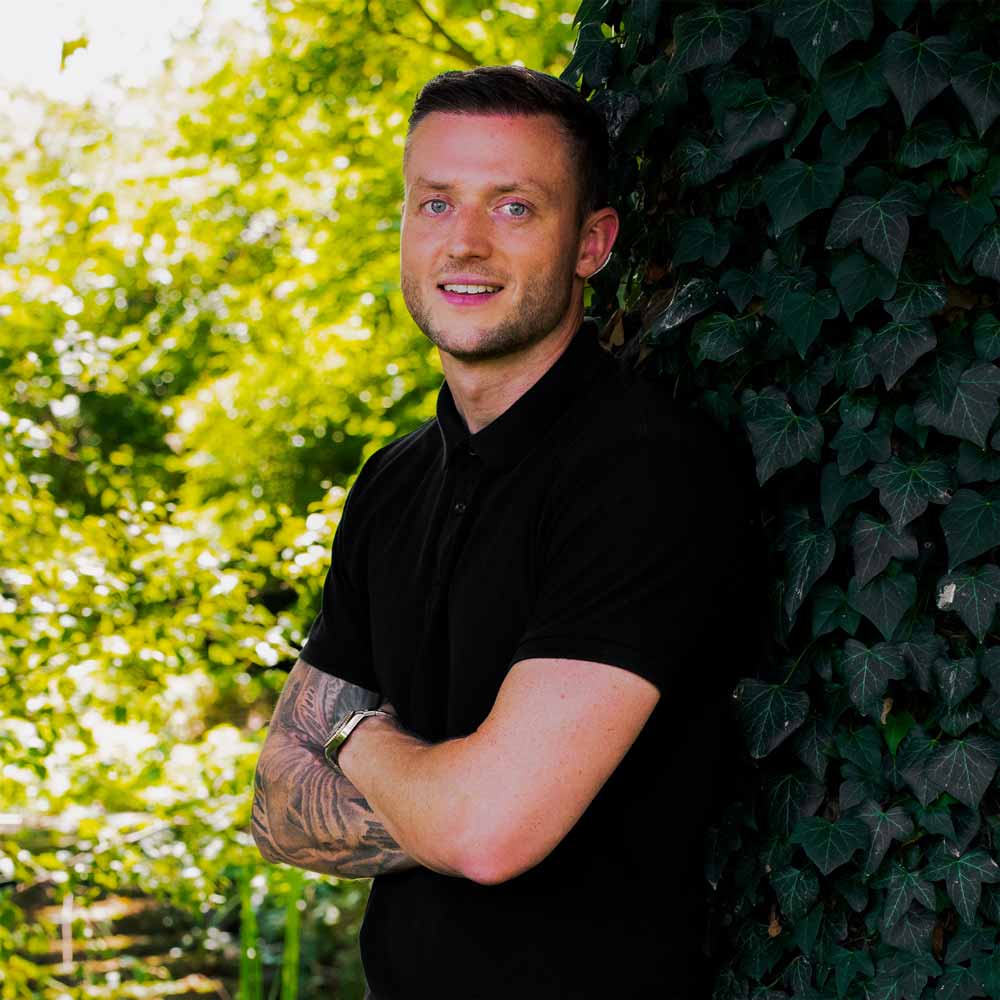
Andy Smith is the founder of NewMed and CELLER8, and the driving force behind The PEMF Podcast. After more than a decade working at the forefront of Pulsed Electromagnetic Field (PEMF) therapy, Andy wanted to create a space that went beyond marketing, somewhere to explore the real conversations happening in wellness, longevity, and recovery. His passion for the podcast comes from years of seeing how much confusion and curiosity surrounds new technologies like PEMF. Through open, science-led discussions with researchers, athletes, and innovators, Andy aims to make complex topics accessible helping listeners understand what’s hype, what’s real, and how these tools can support a balanced approach to better health and performance.
The Audio
Prefer to tune in on the go? The PEMF Podcast is available on all major audio platforms, including Spotify, Apple Podcasts, and Google Podcasts. See all here.
The Video
Catch the full conversation with Ellie McKay over on our YouTube channel. Subscribe to The PEMF Podcast to see every new episode as it drops, along with behind-the-scenes clips and highlights.
The Transcript
Andy Smith 00:00
A quick disclaimer before we begin, the PEMF podcast does not contain any medical advice and the content provided is for informational purposes only. If you have any health concerns, please visit a healthcare professional. Welcome back to another episode of the PEMF podcast. And today I'm joined by a host of Onemission 2.0, Ellie Mackay. From the humble beginnings of Flippingburg as a Burger King, Ellie built a personal brand and platform that was number one podcast in the UK and pulling in over six figures. And then at the peak of its success, Ellie deleted everything. We'll get into what led to that decision, the personal battles and the mental health struggles and rebuilding it all again. She's also stepped into the world of biohacking, which is how we met, to help with her mental and physical health, which we will get into. But the story starts for me around 2019. And at that point, I think it was in a pretty dark place, taking medication for depression, considering taking your own life and how did you reach that point? So really sorry about throwing you straight in at the deep end there. But yeah, how did you, you know, how did you get to that point from before, just before starting, I believe the first On a mission?
Ellie McKay 01:12
Well, hello, firstly, thank you for having me on the podcast. Neither of us are very good at small talk and it's just as well, cause we're going straight in for the suicide chat. So yeah, thanks for throwing me under the bus, Andy. Let's get straight into, yeah, 2019. So what's really interesting is the buildup of events that led to that moment really. And I'd been on medication for probably eight or nine years from I think actually it might have been slightly longer than that from my early twenties, I've been going through quite a lot of stress and anxiety and did what a lot of people do went to the GP because this was quite an overwhelming feeling that had been lasting for months and months and months. Now straight away without doing much due diligence or asking any questions about my lifestyle or life choices, I was put on medication for depression and anxiety and then remained on medication for best part of a decade, if not more than that. Now, over the years, I've upped my dosage, I've swapped to different products and brands and variations of antidepressants, but I hadn't actually realized quite how much of my personality it was taking away. It's only when you remove yourself from the situation and you look back that you can see the negative impact that something's had on your life. Now, you mentioned 2019 and 2018. That's when I launched my business with my soon to be ex-husband. And after a hiatus, I kind of got back into self-development, started getting back into mindset in my old life, my early 20s and my late teens. I was quite a high performance person. I was in a management role. I was responsible for 100 staff at one point. It was all kind of very high energy. Wolf of Wall Street, working in sales, work hard to play hard. But there was a lot of Tony Robbins at the time. It was a lot of the American high energy, high motivation type of vibe. It was again, we used to watch people like Zig Ziglar and a lot of the old American speakers, and it was that kind of really cheesy environment, to be honest. But when I left that environment and a catalyst of events happened, which I'll not go into for the sake of this book, that's going to be here for about five hours, I just found myself in a completely different headspace. Hence going on the antidepressants. So fast forward to 2019. I've launched the business again. I've started to get around high performance people. I have joined masterminds, starting to read books again, audio books, physical books, podcasts, trying to retrain my brain, rewire how I'm thinking. And I actually went to a Grant Cardone event in Glasgow. He came over to the UK. And one of the many things he said that grabbed my attention was about big pharma and about the negative impact that a lot of these pharmaceuticals actually have on us, in particular antidepressants. So it kind of sent me down a bit of a rabbit hole. I did quite a lot of research. I did a lot of self analysis, I suppose, and really took stock of my life and how I was feeling and made the decision, which I do stand by to this day to come off of the medication. However, what I will see, and I feel very passionately about this to anyone who is listening, I did it in a very stupid manner. I didn't consult with my doctor at all. I didn't have a phased approach. I was very much pumped up with the motivation. You know, it's like when you leave one of these events, you feel indestructible. The world is your limit. You can achieve anything. Literally came home, big gesture that nobody could see, ripped up the medication, chucked it in the bin. I don't need that shit. And yeah, that was great for about two or three days until the crash came. I kind of went from being on a really high dose of amitriptyline and various other concoctions to absolutely nothing. Went cold turkey and it left me in a whole world of pain. Like a whole world of pain. It left me suicidal.
Andy Smith 05:42
It's funny, actually, my brother says to me, because in my Instagram profile, you know, I'm owner of a CELLER8 brand and all these sorts of different things, but I put biohacker in there and people suddenly think, you know, what does that mean? Do you doing these sets and things? But I did a talk on biohacking and my brother sort of said to me, what education do you have to get other people talks on health? And this is where the biohacking world is a little bit unregulated. And, you know, there is the kind of medical world, biohacker world, wellness, holistic health, all that sort of thing. And one of them has to go to university for six years and read out books. One of them can change your Instagram bio one day and become a health advocate. So there is that and I understand that. And what you were saying there is that you came back for one of these health talks feeling pumped up and took what in your mind was you stand by it, but it could have had pretty consequential effects.
Ellie McKay 06:46
Yes. Well, a couple of things to see on that point. So I've had Dr. Azim Holtra on the On The Mission podcast and I'm sure, and we'll need to fact check this, but I'm sure he said within, it was definitely no more than five years. I think it may have been considerably less. 50% of the information you learn at medical school is obsolete. It's completely outdated. So that is a reality. General practitioners, they're general practitioners. They have a whole range of knowledge, but they're not necessarily specialists in anything. And I'm certainly not here to disrespect the medical profession. I think we can all agree that there's certain situations where we're all going to be extremely reliant and dependent on that skill set. If you have a car crash or a force there's time for medication, I'm not a complete naturopath. But I don't think enough's done to take personal responsibility for our mental health. Where I went wrong and what I would advise anyone who is considering coming off medication to do is to have a sensible and phased approach to it. You don't need to go from nought to a hundred. So yes, I stand by the decision to come off the medication, but the way I did it was completely reckless. And it left me at a point where as a mother of three children, I don't want to be here. I didn't want to be here. And I believed that that was the best choice for my children. Now for anyone listening to this who's never had or experienced any suicidal tendencies, I can understand they might be listening to this and think, well, how selfish. As a parent, as a mum in particular, our responsibility, our priority should always be our children. And I used to feel the same whenever I heard about someone taking their own life that had left a family behind. In all honesty, I did just think you selfish bastards. But when you're in that situation yourself, what you need to understand is the world is so dark. You have such a black cloud around you that your belief, your true belief in those moments is that your children will be better off without you. And it's almost a selfless act. In my mind at the time I knew, because you've not completely lost your marbles, you're experiencing depression. I knew that they would be upset and I was attached to me no longer being here. But I suppose it was balancing up the pros and cons. And my belief was that after that initial upset, they would thrive without having me in their life, because I was just this vortex of doom that was just going to have a detrimental effect to their lives overall, because I was in such a negative mind frame. And it's interesting because I suppose the original podcast, well the podcast now, it's always been about exploring what success means to different people. And back then, back in 2019, early 2019, a successful day for me was getting out of bed. A successful day was being able to go and brush my teeth. And I remember just cajoling myself bit by bit at the time and I was like, if you just do one thing today, if you can just get up and do your teeth, then that's it. That's all you need to do. Then you can just get back to bed. And then I would force myself and I'd get up and I'd do my teeth. And then I'd have another little chat with myself as I was at the sink to be like, if you can just do one more thing, you can just get change out your pajamas. You only need to put your joggers on. You don't need to leave the house, but you brush your teeth, put your dogkin bottoms on, just nip down stairs, make yourself a coffee, make yourself a drink. That's all you need to do for the whole day. And then that was the definition of success. And then the next thing, and then the next thing, and then it might just be nipping out to the shop. So success is very subjective and it changes for everyone, but just being able to get yourself from, pull yourself by the bootstraps really from such a dark place and to be able to... It's not even a case of shifting the mindset because I think that's almost... almost condescending to what you're experiencing. It's not just the case of put your big girl pants on, put some Tony Robbins on and leap out of bed. It's not like that. So I never want to undermine what I've been through, but it is a hell of a process taking yourself from those lowest depths and gradually rebuilding yourself. And to kind of go full circle as to why we're here, that really became when I became interested for the first time in health, not just in mindset, because the mindset came first, reprogramming my brain. But then I started to realise it doesn't matter what you're absorbing in your head, if you're just filling your body full of shite, full of alcohol, full of ultra-processed foods, if you're not living a very healthy lifestyle, if you're a sedentary, if you're not exercising and bit by bit, I suppose it's just about making those small incremental changes and reclaiming that power bit by bit, taking it away from the pharmaceutical companies. And yeah, I suppose finding that sovereignty.
Andy Smith 12:17
And that's what I like about these conversations because like coming back to my point I made earlier about, you know, why am I educated enough to be giving other people health advice. But a lot of the time we're having these conversations and we're, we've experienced it, we've been through it. You know, I've got my own health story, you've got your health story and the health system a lot of the time is there for when we have trauma and, you know, I had an operation and without that operation, I probably wouldn't be here. But it was the aftercare after that, that really failed me. And that's when I found PMF therapy and kind of got myself out. What was it for you that got you out of that place just before you set up the podcast? You know, so how did you get from putting your big girl pants on in the morning, making yourself a cup of tea and that was your success? How did you get to the point of becoming a high flyer again?
Ellie McKay 13:09
You know what? There was no light bulb moment. There was no big Hollywood clip. It was just inner grit. It was a slow, painful, laborious process which went from days to weeks to months. It's not something that just happens overnight. It's about doing the work day in, day out and making those small incremental changes. So it wasn't just a case of, oh yeah, I found ice baths and all of a sudden I went from being suicidal to skipping on top of the world. No, honestly, it wasn't one particular thing. It was a case of just trying to get out of bed initially and just always trying to be a little bit better than the person there was the day before by making slightly better choices every single day. It was very much that Dave Brailsford concept, the marginal gains. It wasn't any big epiphany as such and it was consistency. It was doing the work. It was almost. Rewiring my brain from scratch, and I just had to immerse myself in a completely different reality, I had to stop watching all this shit on the telly. I had to just change the relationships. I had with negative people in my life. I had to just take ownership for a lot of poor lifestyle choices that I was making at that time, but I wouldn't say I was healthy per se. It was really interesting because I've been listening to people like Gary Breca for years, Hooperman, and I've been dabbling with things. I've been doing bits of breath work, bits of energy work, doing the cold plunges. But I would say it's only been the last 18 months having been through another level of trauma that again, it's made me look in that accountability mirror and think there's no way I'm wasting this trauma. I'm going to use this trauma to become the best version of myself and all the things I've been procrastinating about, like strength training, for example, amongst many, many other things. I'm going to really start taking that a lot more seriously. And I think that's a really powerful message for anyone listening to this, because everyone goes through shit. Yeah, I can sit and tell you about my dramatic stories and no doubt will get into that a little bit, but through sharing with vulnerability and authenticity, what's happened to me, what I've realized is how common it actually is. So we'll have to fill in a few gaps. But when I relaunched the 2.0 podcast and I shared my story, you've listened to the story, you reached out straight away, you were just like, oh, my God, this has just blown my mind. We started off with no subscribers, no followers. And, yeah, I had more messages from that relaunch episode than any of my previous episodes in the podcast that went viral with millions of views and downloads. And the reason for that was because it was so relatable. That's what became apparent. And it actually blew my mind how many people had either went through something similar or their own version of trauma, which was equally as bad, if not worse. And I think the whole experience has actually made me a better person. It's made me a lot more empathetic. And the reason I'm sharing this, I know this is a podcast about biohacking, but it's all interlinked. And I think too many people try to make out like they've got all their shit together, and I definitely don't, even to this day. But what we'll see very openly that I need the toolbox. I'm very blessed to now have the knowledge and the support network and the tools using things like the PMF mat, things I had no knowledge about previously. And I can say hand on heart that these tools, they keep me sane. They don't always keep me jumping around like Tony Robbins. Sometimes I need to use every tool in my toolbox just to be at base level. And I often think, wow, because life's still challenging. We still have the grenades that are chucked at us. Had I not had this knowledge and I didn't have the use of some of these amazing bits of technology or access to the expertise that I've got. I feel like I've been a very different place just now. So I'm very, very blessed and also very passionate about sharing with people what has worked for me as well.
Andy Smith 17:33
I think that's a good point coming back a little bit. You sort of said there wasn't one silver bullet and that there isn't really in life at all. You know, like say people don't just buy an ice bath and become superhuman. You know, it's part of the puzzle. There's so many different things that go into that. There's not one thing that works is in terms of it's all part of the puzzle. You got to build these different things, modalities together. And you know, if you, you found it was just time and things, put it all together, but bringing it back to your first podcast on a mission. What was your first mission for that podcast? What was on a mission?
Ellie McKay 18:09
The mission has not actually changed, so as with most of my adventures there wasn't really much thought went into it, which I'm sure will be a great shock to you knowing how highly organised that I am. It was born through lockdown and I don't know if you know this story because it's actually a little bit woowoo, but the concept came to me during meditation. Did you know this?
Andy Smith 18:30
I've heard it on one of your podcasts. Oh, have you? So you do already. Yeah.
Ellie McKay 18:34
So for anyone who doesn't know the story, lockdown, same situation as everyone else, couldn't get out, actually had a really lovely time. It was great to spend that quality time that will never get back really with the children. But I did feel as the weeks progressed into months that I was starting to lose my identity. I was no longer really the entrepreneur. I was always someone that my role within the business was very much doing like the public speaking, the brand building, the investor relations, just got out for a lot of meals, 10-day events, masterminds, that kind of thing. So very quickly I started to stagnate a little bit and having only just been getting into my groove with it, it started to... I wouldn't say I was getting depressed but I think I was just definitely getting it chiefie as a lot of other people were. And there was one particular day when the kids were being particularly challenging and I basically lost my shit. And my ex Mark just came in and he'd nipped to the petrol station to go and get some milk. By the time he came back it was complete carnage and kind of rocking on the floor going, I can't do this anymore. And he set me up to go and do a meditation, to go and do a TM meditation. And during that meditation it came to me to do some live interviews, which started off as the Sunday series when I interviewed some people of influence, some experts. And I was just amazed that people were interested. It really was.
Andy Smith 20:03
I actually wanted to listen.
Ellie McKay 20:05
Well, yeah, because the first one was a few hundred and then it starts to build and then it's like a thousand and it was a couple of thousand and I've said this before, but it was a real light bulb moment for me, the whole one to many concept, because up until that point I used to go traveling about the country. I used to go and do talks in front of like 50, 100 people always on my own dime, time and dime. And really it was just for brand building. And it wasn't to, there was no ROI as such, you'd just be sharing the journey, talking about mindset. I wasn't really talking about property per se. So the fact that I could reach so many people sat at home in my living room with a glass of wine in my hand every Sunday night, I was just like scratching my head in bewilderment. It was, it was fantastic. But after the 10 weeks when the world was opened back up, that was a pivotal moment. And that's when I decided to continue with the podcast and the on emission brand was built. But really it's, I would say to anyone thinking of starting a podcast, I know for you it's an education tool first and foremost to let people know about the PMF mats and the other products and services that you do and to share the advantages of doing that. And it was quite similar for me really. It was to learn, to grow and to share. And I always say the podcast is like my university. It gives you access to people that you would otherwise not be able to connect with and to be able to speak to, I mean, you've had USC fighters and leading health experts. You've been to speak to A.J. and Eddie Hearn and all these cool people without your business, without your PMF mat, you wouldn't have that inroads and it's exactly the same for me with the podcast. So not only am I getting to expand my own mind and learn and become a better version of myself, but I'm also able to share that with hundreds of thousands of other people who are listening to the podcast.
Andy Smith 21:59
That's it. I mean, the podcast for us, like I say, it always started as a very small educational tool for what PMF is, what high intensity is, what low intensity is, and you know, kind of just did an episode on this. It evolved. We started getting good guests on like the conversation we're having today. And it's, you know, then people started messaging us asking for, you know, we want to chat on this, we want to see how PMF works with this. We want to hear some real life stories, people using PMF and it's just completely evolved into something we never, never thought it would be. And, and like you said, I've learned so much in the process too. I mean, some of the original episodes that we did, I almost don't stand by what I was talking about at those times, you know, it's my views on, on even just the technology, but also on a number of different subjects is like completely changed. So it's completely evolving. But I'm learning so much through this process. And I mean, you know, you got your podcast to number one spot in the UK. You had guests like, you know, and this is your opportunity to do some name dropping. It was Stephen Bartlett. You've had Ricky Hatton, who I think was your kind of big catalyst for getting more guests on and, and, you know, encouraging more big names on. And you're sitting there, number one spot. And then week, two week later, you take the podcast down, you delete your socials. Yeah. Tell me through why.
Ellie McKay 23:28
Well, no one can see my life's boring, that's for sure. Again, I want to do this story justice. I'm a great believer in where focus goes, energy flows, and I'm a very different headspace now, so when I tell this story, I don't want to skirt past anything and minimise how serious it was, but also it almost feels like a different reality. This was 18 months ago now and it feels like a completely different life time. But the short version of the story, as I mentioned, it had set up this business in 2018 with my ex-husband and our business partner, we had a property development business, things were going from strength to strength. 2020, when I decided to launch the podcast back end of the year, going into 2021, I became, I see less operational, wasn't really operational at all other than overseeing the marketing or the property company and put the focus on building new on the mission brand. I was doing a lot of public speaking, getting us a lot of publicity. I was actually writing articles for Business Leader magazine and doing a lot of other stuff. I had launched an online community called Elevate to Success, where we'd bring in some incredible keynote speakers every single month. And from masterminds, things were going extremely well. And back end of 2023, there was some, a few red flags, which is very easy to see with the benefit of hindsight. When you're in that situation and you're not really looking for the signs, things are sometimes a bit less obvious. January 2024, I'm sat in London, I've been podcasting, a really powerful podcast episode, very powerful with a lady who'd actually been human trafficked and had been through the most horrendous experience, such an inspirational lady. I finished the podcast, met another very good friend of mine, Philo Podcaster, who happened to be in London recording at the same time, and we met for a coffee. We both had plans in the evening, I was going for dinner, she was going off to an event, and we're just putting the world to rights when I received a phone call. And it's almost like you're a parent, you're a dad. We sort of talk about life before kids and after kids. And sometimes, I don't know about you, but I think I can't really remember not being a mum. My eldest is almost 13 now. And I struggle to really remember, it's such a big part of my identity. Life before kids just seems so far removed. And it's a bit like that with the phone call. I'm like life before the phone call, like 1.0 and life after the phone call, 2.0. What was the phone call? What was the fucking phone call? So my ex-husband, who was my husband at the time, rang up. And you know, if you've ever had a phone call like this, when somebody gives you some quite serious news, you can just... It's really strange, before they even speak, you can tell there's an energy that comes from the silence of the phone call. I can't even explain it. But there was just a pause, and it was probably only a couple of seconds, but it felt like an eternity. And he just said, everything's gone. Now, there was no context, but I just knew at any burst in the tears. I just knew, I was like, we're fucked. Whoever this is, we're fucked. Been in a relationship for 19, 20 years at this point, and don't know if I've ever seen Mark cry, if I had, it certainly wasn't a regular occurrence. And he was absolutely devastated. So I asked the question, what's gone? And the response I got was, everything. And when he said everything, he meant absolutely everything. The company had been in financial distress for quite a few years. Now, as a director of the company, but I'd never once spoken to the accountant, I'd never once spoken to the solicitors, the brokers, the operational side of the business was very much his remit and his responsibility. I was the marketing director. The other director was in charge of developments in the projects. again, with the benefit of hindsight, we should have all taken a lot more interest in other elements of the business. But you have that one person at the helm and we were also, just to give a little bit of context, anyone thinking, can you be so stupid? We were also being given and shown a lot of false information. So what transpired from this conversation is the business had been run into the ground. All the assets had either been sold or refinanced without our knowledge or permission. Bearing in mind, I think I'm a millionaire. I think I've got well over seven figures in terms of the equity in these properties.
Andy Smith 29:10
And your plans to move to Dubai as well, wasn't you? Like in the process of moving out to Dubai, moving to life.
Ellie McKay 29:16
Well, that had already been kiboshed. So I had mentioned there had been some red flags. We were meant to be moving out to Dubai. We'd been out. We'd been viewing properties. We'd been looking at schools. We'd selected a school. We'd paid our fees. The kids had been on a tour of the school. They'd met the teachers. We'd been purchasing their school uniforms. It was all happening. And this was actually the September before. But some of the red flags, which really were quite glaringly obvious, was the cash flow we were having at the time, which I believe to be short term. I believed that we had commercial developments in place, which were going to be over the line in six to twelve months that had been putting a bit of pressure on us. But through the projections and the cash flow forecasts that had seen the bank statements that had seen, there was nothing too alarming. It was going to be quite a tricky six to twelve months to get out of this situation. But it was nothing that couldn't be resolved. Now bearing in mind as well, at this point, I still believe that we're sat on multiple properties with equity and we've got all sorts of buffers in place and money in bank accounts, et cetera. But it did mean that we had to have the, bearing in mind this was two years in the making, the move to Dubai. We then had to sit down with the children and give them the devastating news that we're no longer moving out there. Now that was in the summer. Now, I still thought we were in a strong financial position, albeit nowhere near the financial position that I'd originally thought we were. But we enrolled my eldest daughter. She was starting secondary school. She went into a local private school. Things were still okay. It was still business as normal. When I got this phone call two days later, I was scheduled to go to Dubai. The flights were booked. The podcast studio was booked. The accommodation was booked. I had some great meetings lined up. I had some sponsorship deals that was meant to be signing. My brand was going from strength to strength. We were going to be getting into live events. We were going to be putting on retreats. There were so many different things that were in the pipeline at that point that just instantly got, yeah, I mean, I couldn't, just to give you a little bit of context because there'll be people who are listening to this that may have went through insolvency or they may have even went through bankruptcy. It was a lot more severe than that. It was a case of the bank accounts had been wiped out. There was no money to buy food. Everything was about to get repossessed. This had been building and building and building and being completely hidden for me. So it was only brought to my attention when the bailiffs were coming to the door. There was no way that he could have kept this hidden anymore. There was investors, people that put their earned cash into the property business that were expecting their capital back plus their interest that they'd been promised that signed loan agreements. People were starting to come directly to me and email me that I'd had no communication with prior to that. So I think it was very much a case of having to tell me as opposed to wanting to tell me. But from receiving that phone call, the extent of it, the reality of it, it just kept getting greater and greater and greater when I found out that they'd been charges placed on the family home and that that wasn't safe. That was never really something that I'd considered. So that was going into receivership. The car I was driving was getting repossessed. We were due to get paid. I think two or three days later, obviously there was no money to pay anyone. I thought we had over a quarter of a mil sat in our bank account. That wasn't a thing anymore that had all been put into the business and lost. And I was actually in a situation which from someone who's got a bit of a public profile that's running events called Elevate to Success, that's interviewing people like your Eddie Hearns, your Al Barris, your Stephen Bartlett, your multi-millionaires, your billionaires, the founder of Reebok, all these incredible people to then be in a situation where I've got people having to put petrol in my car and bring trays of food round so I could feed to my children. It's never a reality that I expected myself to be in. And I mean, not only is it a humbling experience, but it was actually quite a powerful life lesson in terms of, allowing people to help me and receiving help has traditionally been the person who does that for other people. I like to be the provider and the giver and to treat people. So to actually accept that was it wasn't even a difficult process at the time because it's like Maslow's hierarchy of needs. You might think, oh, was there any shame attached to that or any embarrassment? And under normal circumstances there probably would. Like if now I had to say to you, Andy, could you give us 20 quid to get the dream back home because I'm a bit skinned, that would be a bit embarrassing. But if you can't feed your kids and you need to accept help, then there's just zero shame attached to receive it and support. And I was very blessed to have some incredible people around me. It was a horrible, horrible time. There was a lot more to it than that. My dad, the person really out with my own immediate family, my children, who's the closest person in my life, had invested his life savings into the business. He was staying and had a lifetime tenancy in one of her properties, which was about to get repossessed. So to go and sit down with a 70 year old man and tell him that he's lost everything he's ever worked for his entire life and is going to be made homeless. It was definitely the darkest time of my life. And from a health perspective, as well as a mental health, me, your chorus was through the roof, you're just in fight or flight. I wasn't sleeping. And when I say I wasn't sleeping, I mean, I went three or four days without getting any sleep at all.
Ellie McKay 35:34
Heart palpitations constantly, I had a tick, I was like having convulsions. I was a physical mess as well as a mental mess. But the next day from finding out this information and steering a wall, somehow getting back from London and steering a wall and having to get up the next day and do the school run and somehow present as OK to the children. And it was just a very, very surreal time.
Andy Smith 36:05
And you deleted your kind of entire existence off of social media and that sort of thing. And was that because some people might be listening, thinking, well, you know, if the, if the property business has gone under, then why wouldn't you just fully lean into the podcast? And why wouldn't you capitalize on the growth and the income that's coming from that? Was that a personal decision? Because like you say, how can you stand up in front of these people and say to them how to grow, how to be successful in the situation you was currently in? Is that?
Ellie McKay 36:36
No, I mean a few things here. Firstly, thankfully, I never position myself as the expert on the podcast. My job is to facilitate the conversations with the experts. And I'd been interested in a far more spiritual path for the last few years anyway, very much talked about my definition of success being linked to the power of relationships, success. I've always said that relationships are the highest form of currency, speaking a lot about things like grounding and getting around the trees and positive mental health and the fact that money is not my God nor it never will be, which thank God I got that lesson prior to all this happening. But the reason I burned the socials to the ground was for a multitude of reasons and I'll be completely honest about it. Firstly, when you're going through complete trauma, and I mean real trauma, you don't know where you're going to be living. You don't know how you're going to feed your children. You don't give a flying buck about social media or what people think of you at that point. So I just needed the headspace to try and provide for my family and meet our most primitive primal needs at that point. So social media and the podcast wasn't really a consideration. Although saying that, I say, so actually I'm going to contradict myself. It was just bad timing. We have normally got a bank of content recorded, but for whatever reason, we'd went from having like two months worth to about two weeks worth when this happened. I remember saying to my podcast manager, Keira, this was the day I found out on a Tuesday night. This is first thing in the Wednesday morning. I'd sent her a message. She was messaging me about various things on the Tuesday. I said, I can't speak. Something's happened. Something really serious has happened. So she knew. The Wednesday morning, I somehow got on a Zoom and I just remember saying to her, it's over. It's all over. She's like, what the fuck are you talking about? It's like, it's the business. There's no money to pay you. The podcast, everything, it's done. We're done. And I told her what happened and we both cried. And I just remember she looked at me and she went, well, she's like, you can quit if you want, but I've got the Stephen Bartlett to turn around. So I'm just going to get cracking. And she just kept working. She just refused to quit. So I had some very good friends in my ears that were telling me, and this is going through, this is like the crazy thing. And this is why I suppose, going back to your question before about what gets you through the dark times, I have to honor myself a little bit and see there's definitely some sort of inner grit there. Because yeah, everything I said was true. I wasn't sleeping. I'm having these heart palpitations. I was in a very, very dark place. But I was also still putting one foot in front of the other. Failure wasn't an option. And when you've got three children financially dependent on you, you just, again, I'm not judging anyone else who might lose their shit in that situation, but to me as a parent, first and foremost, my responsibility lies to provide for my kids above all else. And I will do whatever it takes in that situation. And that meant keeping my shit together. So a few friends were saying, whatever you do, do not stop the podcast. I know at the moment you're just, obviously it's the last thing that you want to be considering, but look where you are. You've just got to number one in the charts. The algorithms are flying and you know yourself from podcasting, you need to be consistent. If you just go miss three or four weeks when I'm putting two episodes out a week, it's amazing the dip you have with your download numbers. So it was the most bizarre thing. I was still doing podcasts. This was maybe two weeks after getting the crazy phone call. And I've got my home studio because house wasn't repossessed really. It probably took about a month. And you can see, I'll need to show you different photos where things are getting removed from my studio bit by bit as I'm selling them. It's like my sofa's going and bits of furniture are going and the noise, the audio was getting more and more horrendous because the room was getting more and more equity as things were getting removed. And yeah, so I was like limping on. It was just the most bizarre thing. I remember doing an interview with, I think it was one of Julian Assange's, a guy doing a film, a documentary on Julian Assange, and it was a fantastic interview. Kim, forget what his surname was, but it was the most bizarre thing. I'd just been dealing with liquidators and receivers and solicitors and literally just staring at a wall for about two hours then before this podcast, dragging myself up and somehow changing my energy and performing and doing this interview. So the social media was gone straight away, deactivated, but the podcast was still limping on. The reason that I took the podcast down was because it was interlinked with the business, which was a really schoolgirl error, very naive. I knew very little about business and how to structure a business. I'd actually set up on company's house, the on-the-mission, we wanted to separate completely because obviously we're bringing in quite a lot of revenue from the business. It was a six-figure business, as I said, but unbeknownst to me, that money was helping to prop up the property business. Whereas my understanding, I'd been led to believe it was a lot more efficient to keep them as one entity and it was all presented in a way that sounded really highbrow and I wasn't intelligent enough to understand. But as a layperson, I just listened and believed that that was the best thing to do. So when that company got liquidated, the guy in charge of that bit of an episode, to be honest with you, starts to basically write it down and tell me that it's going to be an asset of the business. And I thought, you know what, I'm not going to be bullied. I'm not going to buy back my own podcast. If you think there is a commercial value in the on-the-mission podcast without Ellie Mackay, the host or any of Ellie Mackay's guests, then good luck monetising that. But I'm not going to be intimidated. And that's what was starting to happen, really. So I made the decision I was going to rebrand, I was going to relaunch, rebrand as Unbreakable. But it was actually a conversation with Al Barrett, who is the founder of Grenade, who had been doing an interview with him at his house and I'd been chatting to him about the situation and the fact that I was going through liquidation, bankruptcy, divorce, and I'd completely taken down the podcast and flowed the idea of Unbreakable past him. And he just said, look here, Matt, you've built up too much brand equity with on-the-mission. It's synonymous with you, with Ellie Mackay, people know the podcast, you've got an excellent reputation, you've had some phenomenal guests. That carries a lot of leverage, even if you're starting again from scratch, I would be very mindful about ditching on-the-mission completely. Hence why I decided to do 2.0 and yeah, but it was a tough decision. It was a tough decision starting from scratch. It really was, but I think it was inevitable, really. There's no way I came that far to only come that far. And what I've learned about myself and life in the last 18 months is absolutely priceless, Andy, and I feel like it would almost be Cardinal Sin not to share that with people.
Andy Smith 44:24
So let's talk about On A Mission 2.0 and Ellie 2.0 because I've only known personally Ellie 2.0, uh, I did actually listen to a couple of your podcast when it was On A Mission 1.0. Um, so that's why when you reached out to us through Zane at London New Tropics, who you had him and then me on your podcast, I already knew who you were and what, what your mission was. Um,
Ellie McKay 44:48
Yeah, so that was just really serendipitous again, how that came about, wasn't it? I was going to interview... So Zayn was originally meant to be coming to Doncaster, but I had to reschedule. I can't remember, there might have been an issue with the studio being double booked, so as you know, those guys are insanely busy. I said, look, let's keep the date. I'll come to you. And then when he checked his diary, he already had you booked in and he reached out to me and he's like, I've got Andy Smith from CELLER8 coming, but I reckon he'd be brilliant for your podcast. Yeah, so it all aligned. Yeah, it all really aligned.
Andy Smith 45:20
And like I say, we, we haven't known each other for a long time, but actually we've, we've done quite a lot together already and we've, you know, we've got to know each other quite well. We, um, you know, you said there's nothing off the cards on this podcast and we've done, uh, adapted an adaptogenic breath work together, which was the day that we did the, uh, podcast with Zane, uh, which for anyone doesn't know is, is breath work throwing in some magic mushrooms into the mix, a little bit, a microdose, but then it brings it forward. Um, so yeah, so we've done magic mushrooms together as a, as a biohack, you know, you got to try all these things and you got to put yourself out there. Um, and also we went to quite a nice evening together to meet, uh, Brian Johnson, big, big biohacker in the US, uh, a nice intimate setting with only like 80 to a hundred people that were there. So, you know, and it's quite a small time we've, we've, we've crammed a lot in together, got to know each other quite well, which is, which is nice. And, you know, we, we kind of both on these two different missions, but who is Ellie 2.0 and why does she differ? And the same for the go to the podcast. What's different this time around?
Ellie McKay 46:26
I hit the downloads.
Andy Smith 46:27
That's it.
Ellie McKay 46:29
The fucking revenue. This time around it costs me money, doesn't make me money. So as I said before, I've been very interested in health and wellness for quite a long time, but when you're in a situation like the one I find myself in, you're in Rockbomb. It's a strangely liberating place to be. At the end of the day, no one asks to be in this situation. 20-year marriage has came to an end, going through separation, divorce, financial ruin, dealing with all this heartache, dealing with the emotional fallout of my dad and everything else that I'm going through, multiple house moves, trying to protect the children from all the distresses, which in itself is no small feat, trying to normalize everything that we're doing and make sure that they're not impacted or the impact is as minimal as it possibly can be. I think that changes you as a human. I think it humbles you massively. And I was a good person before. My mission was to help people. It was to inspire people. But my belief is the more that we learn about ourselves, the more that we explore ourselves and keep peeling back those onions.
Andy Smith 47:51
How many onions have you got? I'm sure you mean layers.
Ellie McKay 47:57
You know, so this is like, if you listen to that thing back away, I'm like, no, the new game never comes back. I never recorded another podcast episode. But the greater the depth of understanding that we have for ourselves, the more I think that we're equipped to help other people. I'm a very different person. I'm a lot more compassionate. I said to you earlier about the relaunch episode and the amount of messages that I had from people. I feel a lot more of a kinship with women in particular. I've got quite a lot of really strong, amazing, incredible women in my life. And for the first time, I'd say I've got a bit of a sisterhood going on, which does sound a little bit cheesy. I historically have always got on better with men, I would say, and I still do. It's probably about 50-50. Whereas before, I'd say the majority of my friends really were guys. So yeah, I just think the reason I mention that is because even though I've had to be in this fight or flight, hunter-gatherer mode to a degree for my children, I've also tapped more into my feminine energy than I ever have before. I am a lot more compassionate. I'm a lot more caring. I'm a lot more empathetic. I'm far more interested in doing podcasts around health and biohacking than I am around business success stories. Although, obviously, anyone's welcome on the podcast, but really, it's very much about... It's never about what someone's achieved in terms of financial success. It's about the process they've had to go through to get there, the mindset, the resilience, the attributes, and the disciplines that it takes. Actually, that's quite similar to athletes and other high-performance people in different sectors. So I would say the original podcast probably had a lot more coachees and very high-level people talking about. I don't know. I suppose there's still quite a lot of similarities in that sense, but I'm definitely attracting a different kind of person. You know what's really interesting? I'm tapping into a whole different frequency now, and even though the podcast is only getting a fraction of the downloads to this day, I'm more, what, six? No, we're about eight or nine months into the relaunch now. You know yourself. I remember the first time around how long it took to get to 10,000 downloads per episode. In fact, Stephen Bartlett's your degrad and maybe send it to you to just add to whatever clip you're putting into the video version here because he launched Diary of a CEO in 2017 and he just went like that, flatlined, flatlined, flatlined, and then it's such a gradual curve and then all of a sudden the incline just goes through the roof. That was my experience the first time around, but what a slog it is trying to get to that 10,000. To me, that 10,000 downloads per episode is your magic number, and if you can hang in there, whereas the vast majority of people don't know what the statistics are, but it is 95 plus percent of people will quit before they get to that point.
Andy Smith 51:10
Well, we, we read this thing that, um, what is it? 1% of podcasts go over episode 10. 1% go over episode 10. You know, that's, and, and you see it happening all the time, you know, I get invited on someone's podcast and they're on episode seven and I'm their last one. Maybe it's me, maybe I killed their episodes. Um, yeah, it's very rare for them to get on, get over that. And, and we found that with ourselves, you know, we were on maybe episode 12 and I'm thinking of self, what, I don't have time for this. It's like so much hard work for three people to listen to in their kitchen that, you know, that, that we, after those two weeks or thing, but like you say, it's the gradual buildup and it becomes more and more popular, more people listening to, and it, and it actually starts to work. Um, so, I mean, he was just talking to him as well about, um, cause we were talking about this over lunch was the high performers, people that are, uh, high performers in business, but not necessarily looking after the health. And, and I'm living in a couple of lives at the moment with my family business and with, with my business, new med and CELLER8 and you know, I'm got, uh, opportunity to have a clear split at the moment to move into my own thing. And just a hundred percent in the biohackers base, which is what I need. Cause I can't keep straddling both of those horses. Um, but they're very two, two very different worlds and family business is a very business orientated thing. And we end up sitting around a table with high flying business people, but I look around sometimes and I think some of them are my same age as me. Some of them are 10 years older. Some of them look like they're on the death bed, you know, and they're millionaires, some of them are billionaires. And, but they're not looking after the health like, and you know, we were saying that this, you know, health is, is wealth. It really is. It's, it is the, it should be everybody's number one. We was at a table last night and the top guy had been flown in for America. He was fly. He flew in yesterday morning, had the meeting with us. It finished at 12, 30 midnight. Everyone was drinking wine, except for me, I managed to avoid it. And then he was flying out again. I think his flight was 4AM like, and you just think, what is this guy doing to himself? So, you know, coming back to Ellie 2.0 differences you're putting in now, you know, you're obviously relaunching the podcast and you do want it to get to a point where it's going to be back into those six figure sums. But.
Ellie McKay 53:40
Oh, and beyond.
Andy Smith 53:41
and beyond. Significantly beyond. But you're doing it differently this time and you also got your health to consider, you're getting a lot more people on like myself, into the biohacking, into the wellness space, have the products, that sort of thing. What are you doing personally? I see you posting in your ice bath every morning and you've just got sauna, so tell me about those.
Ellie McKay 54:02
Yeah, look, no one's coming to save you. This is the reality. When you're going through shit, and as I said, I don't want to presume that mine is worse than anyone else's, life can be extremely challenging. You have to look into that accountability mirror and be honest with yourself. Are the actions that you're taking helping you to feel better or for worse? It really is that simple. And when you're going through extreme stress, it's understandable that people want to sedate. I completely get that. They want to escape the reality. What was finding last year? So, the year previously, I'd done the one year no beer challenge. 14 months, completely alcohol-free, and I documented a lot the health benefits. Now, amazing. I felt, ironically, I went in a health and spiritual retreat in Mexico, I think in the following February, and I ended up drinking tequila in the nightclub, and it all kind of went to shit. And anyway, I noticed that it just gradually started to build back up again. So, I nipped it in the bud, did the second half of 2023 alcohol-free again. 2024 gets the phone call, as we've already discussed, and very quickly, I started to use alcohol as a coping mechanism again. Now, I wasn't getting drunk. I wasn't an alcoholic, but I was definitely starting to have a glass of wine most nights, and very much felt like I was entitled to it and I needed it. And that was the association at the end of a hard day dealing with all this bullshit, which was so intense. If I could make it to the end of the day, I could just go and have a bubble bath and have my glass of wine. And it's kind of like my and relax moment. And as we started to get towards the back end of the year, and making small incremental improvements in different areas of my life and rebuilding, I've managed to meet those basic needs, first and foremost, that I was talking about, like getting a house secured for the children, being able to get a car again, to be able to do the school run, be able to pay the rent confidently every month and put food on the table. Then it was starting to bit by bit one foot in front of the other. What's the next thing I can improve and what's the next thing? But the stress kept on coming and still is coming to a degree. And I had to be honest with myself and ask whether or not I was doing everything that I could to give myself the best opportunity of not just surviving the shit storm, but actually thriving despite what life chucks at you. We can't always choose what happens to us, but we can choose how we react. And I just felt that I'd lost enough without giving away my energy, my happiness and my soul. The future's spotless for all of us. The next chapter is yet to be written. And that's when I made some pretty life changing decisions, decided to stop alcohol completely, which you and I spoke about because you were telling me over lunch the story about going out for dinner last night and everybody else was drinking. And whilst I never had a problem per se with alcohol, I do think I had an unhealthy relationship with it. And I don't really have any self control in the sense that in that environment, not drinking wouldn't have been an option. If everybody else was having a few glasses of wine, 100% I would have been partaking as well. Whereas as a non-drinker now, it's not an option and it's not a consideration. When I've tried to moderate habits in the past, it ends up consuming too much of my thoughts. I'm like, oh, I've witnessed this thing on Saturday. Should I drink? Oh, I'm not sure. Or maybe I'll just have a couple or, oh, I wonder if they do cocktails. And it was just, maybe I'm a bit autistic, but those boundaries and those guidelines just really helped me. So that was one decision. Exercise. Now, I know I'm not exactly reinventing the wheel here. You talk about biohacking. I'm like, oh, this decade can change their Instagram gram profile.
Andy Smith 58:03
You definitely just caught me a dickhead, that's fine, I'm used to it now.
Ellie McKay 58:08
I think you've even got Tequila drinking biohacker on yours now.
Andy Smith 58:12
that for a minute and I'll take it back over again. Oh, did you take it off?
Ellie McKay 58:15
too much backlash. But again, I mentioned about relationships being the highest form of currency. I've got some incredible people in my life and I've built up some amazing relationships over the last few years.
Ellie McKay 58:30
I've got a very good friend of mine, Anne Harrod Wrigley, a shout out to Hot Tub's Rock, fantastic company. They actually sent me all singing, all dancing, chill tub. They drove all the way from Gloucestershire and came to deliver that on New Year's Eve for me, came and installed it in my back garden. Absolute game changer. I've been doing called Plungies consistently for years, just one of the inflatables. But again, I suppose it's about knowing yourself. I'm not really someone that's going to go out and change the water every couple of days or maintain things. It's just not really my bag. So it just wasn't something that would have happened. Anyway, it got destroyed and the all the trauma of divorce and everything else that was going on. So to have a chill tub that's self-cleaning and self-regulating with the temperature was an absolute dream. I can just rock up every morning or a couple of times a week. Actually, that's important to see because I don't do them every morning and women don't and shouldn't. They don't have to.
Andy Smith 59:33
It's coming out now, which is good, isn't it, to show when people should be doing ice bath. And my wife, you know, we've just spent six grand on like the best of the best ice baths you can get. And I'm thankful for that. It's an amazing opportunity. I didn't spend that much because no, no, the, the, the CEO of the company, but she, my wife won't go near it because she's tried cold plunging. Doesn't work for her. You know, she will do the PMF therapy, should do the red light and that sort of thing. And that's fine. And it's finding what works for you. And like you say, especially for women, they have to know when is the best time to do cold plunging.
Ellie McKay 01:00:08
Yeah, 100%. But doing that, I mean, it's just amazing. As you know, for all sorts of things, it helps with your sleep, your anxiety, your focus, inflammation. For me, it's been an absolute game changer over the years for my mental health. So just to have access to that as and when I want has been phenomenal. But just taking a bit more responsibility for my health and fitness, I've done a lot of running and things like that over the years, always procrastinate with the strength. Now, I'm 42 when women get to a certain age. Well, I think anyone really that gets 35 plus, we need to be focusing on building the bones, building the strength, building that foundation, the infrastructure. Because without that, we're all fucked for want of a better term. So yeah, actually doing things that I've been putting off for years. No one is coming to save me. It's just me now. I'm on my own, me myself and I. And that can be a scary concept, but it can also be quite an empowering concept. I made a pledge to myself to become the strongest, fittest, healthiest version of me that I could be. And it's not to be some sort of a hero, but it's to show people in real time that failure is not final. We're either learning or we're growing and you can't wait for all your ducks to be in a row in order to make these changes. In my humble opinion, it's making these changes are the things that going to acCELLER8 your growth. You have to make the changes and be the person that you want to be in order to get the results. You've got to be it before you become it. So it's tapping into that energy, tapping into that frequency and taking those actions in your darkest hours. And it was quite a scary thing for me during the relaunch episode and being so vulnerable in real time, because in the past I've spoke about post-natal depression. I've spoke about my challenges with mental health that you asked me about earlier from 2019. I've shared that and I've shared how shit it was. And it's really helped people, but what I haven't done is ever share in real time. And that's the same for the vast majority of people. We tend to wait until we're through the other end, until we've got all our shit together. And it's just another rags to Richie story. And yes, there's a lot of value from sharing those vulnerabilities, absolutely. But a lot of people, myself included, are too scared to share when you're still very much in the trenches going through it. So for people to see me now rebuilding from scratch with no team, with no resources, with no money, with no backing, with nobody, not nobody at my corner, I'm blessed to have some incredible people on my team. I think that's a lot more inspiring to people, doing it with no budget and having to get resourceful and trading in sheeps and goats instead of money and doing skills exchanges with people. I think it's Tony Robbins, in fact it is Tony Robbins that said, and I've quoted this repeatedly actually over the last few weeks, there's no lack of resources, only lack of resourcefulness. I was telling you earlier, I've just converted my broom cupboard, my little earring cupboard at home into a little studio. Now I had an old singing, old dancing studio in the big massive detached house that got repossessed, but that's not my reality anymore and I can achieve everything I need to achieve in my broom cupboard. It's soundproof, I've got some nice plants, I've got some nice pictures, it looks cool as fuck on Riverside to the angle I've got it set up on. It actually looks better than my previous home studio, which is just ironic, and I couldn't feel prouder. The other thing I think is important to mention is I've never experienced more gratitude, which is very much linked to biohacking and health because if we're not grateful for what we've got, if we're constantly waiting for the next thing to happen in order to feel that sense of fulfillment or achievement, then we're just prolonging our happiness to a tomorrow that's not guaranteed for any of us. So all of these tools that I use, and you're right, I use infrared sauna, again, shout out to Otubz Rock, incredible company, they've came and I've got my own little biohacking set up now, my PMF map, obviously the red light therapy, that's been a game changer for me. And I think again, I think it's important to say you and I had a conversation about different podcasts out there and I'm not going to name names, there's a lot of them, a lot of the big podcasts that charge people to come on. Now to me, I feel that that's disingenuous. I don't judge other people, that's their prerogative, but I want my followers, my community to know that everybody I have on my podcast is coming on because it's something either I believe in or I'm interested in learning about. It's never something that people will be able to buy their way onto. If you ever see me endorsing something online, it's not because it's a paid partnership, it's not because it's an affiliation, it's because it's something that I truly genuinely believe in. And you know I shout about the PMF map because that has been a game changer for me. It's been massive. I mentioned I'm doing more strength training, I'm doing more exercise generally. Like I said to you tonight, I rang you up and you're like my unofficial life coach now and I pull my back because I don't have a clue what I'm doing with weights. People see me on Instagram like looking all cool, going through my high rocks. They don't see me inside high rocks looking like a complete sparse, but that doesn't mean...
Andy Smith 01:05:43
You never post any photos or videos inside.
Ellie McKay 01:05:45
I don't go. I just stand outside, take a selfie and fuck off. But yeah, the weights is unfamiliar territory for me and my form is pretty crap so I'm constantly pulling things to be honest and the PMF mat has just been incredible. I was walking around like an old bitty, like a 90-year-old hunched up in absolute agony. And yeah, putting the controller on my shoulder, just doing the mat three times a day, it was gone within 24 hours. I couldn't believe it. I mean, I'd properly pulled my back, my shoulder was in agony. So that's just one of the many ways. But I've noticed if I've been away anywhere for a few days and forgot to take my mat, I get cranky.
Andy Smith 01:06:33
It's funny that a lot of people say that because some people will try PMF therapy and because you don't feel anything happening, they don't really know what's going on. And when they take it away is when they notice it. And um, Ollie Ollerton, who you know, and who we've both had on our podcast said exactly the same thing. He said, you know, it's, it's part of his morning routine now and he's using it every morning and he only really notices what happens when he doesn't use it because then he's not quite switched on that day. He's not quite firing on all cylinders and he's not, he's feeling different, you know, compared to when he does use it, remember to get it into his routine. So it's, it's a good thing. And that's why PMF therapy is something that needs to be done kind of daily, um, to be consistent. Um, but again, it's all part of the puzzle.
Ellie McKay 01:07:21
What you said there, I think, is really important because we often work very hard to feel good about ourselves. We'll get the body we want or we're feeling amazing because we're nutrition's on point, we're taking the right supplements. Now you get your super consistent, highly disciplined people and then you get people like myself or Ellie 1.0 who get myself to a place of feeling incredible and then stop doing all the things that have helped me to get there. And we see all the time, don't we, which is why people's weight fluctuates continually or even the thing like giving up alcohol for 40 months and feeling the best I've ever felt. But then going back to it, why would you do that? Why would you make that decision when you feel significantly better? And it's exactly the same with the PMF mat. My kids notice when I don't use the mat, but it's that easy. In terms of morning routine, it's quite compact. So it just slots perfectly from my bed, down the side of my bedside to table. So it's the first thing I do in the morning. I get my controller, get my red light therapy lamp and I kind of hold my red light therapy lamp. I can get it wedged under my pillow and it's just the nicest way to come around in the morning.
Andy Smith 01:08:33
We'll have to get you a stand for that, because you said you dropped, you fell asleep and dropped it on your face, didn't you? Because I was going to kill people that! I'm first bullet! So all this buy hacking comes at a cost sometimes, but... He does! So we've got a solution for that, we'll sort you out.
Ellie McKay 01:08:46
Well, that was the other thing. Today, we were just in that place. They had one of your mats and it had the cover over the top. And I was just like, that's what it is for. You sent me a cover, but I didn't know it was a cover.
Andy Smith 01:08:58
So we was in Holosophy in London Bridge in London, if you if you want to check out the centre of maths you can go there to see it and what Ellie's talking about is we've got like a towel cover that goes over the top which makes it more comfortable, it's easier to clean and all these sorts of things and you looked at it and went that's what that thing's for. What did you think it was for originally?
Ellie McKay 01:09:19
I don't want it to be rude, but I've been contemplating whether to give you the feedback that they could be a little bit comfy. I laid down on it today, I was like, this is so much better. Yeah, that's what it's for. But in terms of other things that I'm doing, I'm very mindful about my nutrition now. I'm taking all the right supplements, making sure I'm taking creatine, obviously have the adaptogenic coffees, taking the collagen, taking a very clean protein, making sure I'm having my MCT oils. And I am doing all this stuff sometimes just to keep me at base level. And I appreciate not everyone can necessarily afford all of these tools. I've been very blessed with the amazing people that I've got in my life to support me during this sort of period of getting back on my feet. But even cold showers, grounding, just getting your bare feet on the grass, being more intentional with how you spend your time, trying to keep away from the phone. I mean, this is obviously one of the big things about the PMF mat as well, isn't it? It's trying to undo a lot of the damage that's getting done when we're spending all day in front of the computer or the phone. Now, it's a blessing and a curse. I can pretty much do everything I need to do in terms of my work on my phone, but it means I've got a very unhealthy relationship with it, not just in terms of the EMFs, but psychologically as well. So I think going back to nature as much as possible, getting out to the coast, getting up in the mountains, getting around the trees, they've been things that have been an absolute lifeline for me during these dark times, these challenging periods of my life. I think they even prescribe it. You and I may have shared some information on this in the past. In Japan, they'll prescribe you with two weeks off to go walk around the woods if you're struggling with your mental health, whereas we don't do anything like that here.
Andy Smith 01:11:21
And Japan are the ultimate tree huggers and tree hugging is a, is a form of a form of grounding. And we've talked about that on the episode we did for Professor Green. So it's, uh, it's, it's funny because tree hugging was seen as such a condescending term originally. And you know, would I consider myself now a tree hugger, maybe a grounder?
Ellie McKay 01:11:43
Do you class yourself as a tree hugger?
Andy Smith 01:11:45
I love to hug a tree. Do you know what the funny thing is? I don't go around hugging trees, but I, I do tend to lean on them because I want to touch them. Is that a weird thing?
Ellie McKay 01:11:57
Oh my God. Okay. So I've evolved. I was a self-professed tree enthusiast, not a tree hugger. I couldn't quite bring myself to be a tree hugger. Deep down, I still think I'm a bit too cool to be a tree hugger. Okay. I have said this many times, old Ellie would fucking hate new Ellie. Old Ellie would punch new Ellie in the face. So I used to think of any excuse to lean on trees. Also my eldest daughter used to just get mortified as well. She says, I'm leaning, pretending I'm sorting my shoes or tying my laces. I don't give a fuck now. I'm a fully fledged tree hugger and I don't care. There's something really powerful about knowing that those trees were there long before you even existed and they're going to be there hundreds of years after we've left this planet. I'd love, you know, people say, who would your dream guest be on the podcast? I'd love to go and interview a 1500 year old tree. Can you imagine the stories they would tell?
Andy Smith 01:12:54
That's one of the reels that's coming out here. You want to interview a tree, that'd be a good one. So while we're down this dark path, you interview some people, you learn all sorts of different things. You know, um, I would say, I don't like the term conspiracy theorist, but I would say you're more of one probably than I am and you've gone a bit deeper into that rabbit hole. Um,
Ellie McKay 01:13:19
The only conspiracy is BBC News, my friends.
Andy Smith 01:13:22
Here we go. So what, my question really is, think of one now that probably you wouldn't have, five years ago, you would have thought that's completely abstract. No way I believe that. What do you think now is the most abstract thing that you do think is a reality?
Ellie McKay 01:13:43
Well, I mean, it's good question.
Andy Smith 01:13:45
Close it out
Ellie McKay 01:13:46
Just like, should we talk about Brigitte McCrone or, um, you probably do even do that, like what I'm talking about here, what I'm alluding to do you know, I heard the rumours about Brigitte McCrone being a man.
Andy Smith 01:13:58
Uh, no.
Ellie McKay 01:13:59
No, me neither. She's currently doing quite a few podcasts. Yeah, I think she's coming after Candace. Candace Owens at the moment. I don't know. What do you want to talk about? 9-11, Midland? Chemtrails, that sort of thing. I just don't understand how anyone can think that this does conspiracy half the time now. I mean, so where it started for me was 2020. It was Covid. It was during the pandemic. I was watching the world shut down, as we all were. And it was like an apocalypse, wasn't it? I just remember looking at the screens and seeing Gatwick's at a standstill and all the international reports across the world. And then it's going to Rome. It's going to Times Square. It's going to central London. And it was just eerie. There wasn't a single person out in the streets. And it was so scary. And for the schools to shut, for the whole world to shut down in the matter. It did shut down in that manner. I found it absolutely terrifying. I definitely at that point wasn't thinking anything along the conspiracy lines. It was only several months later, really. In fact, actually, it was quite judgmental about people that were coming out on social media, saying, you just wait, there's going to be this vaccination rollout and everyone's going to get mandated to do it. I was just unfollowing people. I thought, well, nobody needs to be hearing this. We've all got enough in our place. We're all trying to keep our businesses afloat and keep our children entertained and everything else at that time. And I remember our government very kindly allowed us out for an hour a day and going to the woods with my husband and the kids. And this lovely old couple, they got within the two meters that we were allowed to get to within each other. Oh my God, I was absolutely beside myself. I remember screaming to my ex-husband, like I lost my shit. I was like, you've allowed our family to be put at risk. That's it. We're not leaving the house again. We're not taking our one hour a day. This is too dangerous. I remember nearly getting into an altercation in ASDA because we had the arrows that you had to follow one-way systems and all of this kind of thing.
Andy Smith 01:16:32
when you see them on the floor still isn't it like that that was happening you know when you go into a supermarket and they haven't quite cleaned the aisle yet and you've still got some blue arrows telling you which way to go and stuff is it's surreal to think some of the stuff that was happening when COVID went through and I think that's it was a breeding ground for a lot of people to think very differently.
Ellie McKay 01:16:52
Well, look how we all conformed, myself included in those early days. I'm sat there patiently waiting two meters away from the next person. But as things started to progress, I noticed for the first time. So in the past, we've always been presented with two sides of the debate, or at least that was my understanding. You'd watch something like Question Time and you'd have someone or several people making the argument for leave and then another crowd for remain. You'd listen to both arguments. You could go into your own research and then you'd make a relatively informed choice based on the information that you had. But somehow during the pandemic, I just felt like we were being presented with one narrative and one narrative only.
Andy Smith 01:17:36
You must do this. Yeah. It was the dictation of what we will be doing for the next few months, I think.
Ellie McKay 01:17:43
It was as the vaccine started to get rolled out and I started to become aware, I can't remember how initially, of people like Dr. Robert Malone, who was the co-creator of the mRNA technology, and I'm starting to read some of these sub-stacks and Twitter at the time before Elon took it over, and I'm seeing Robert and then lots of other doctors and professors, experts in their field, getting de-platformed. Now that was the thing that was a huge red flag for me. I thought never before have I seen information be suppressed in that manner, and I started doing some more digging. I think it was all telegram at the time, and I'm reading more and more articles, and more and more people are sending me different reels. I started to connect with some of these people and invite them on my podcast. I think Joe Rogan did a massive contribution to the world at that time. His episode with Dr. Robert Malone, I think within the first week, done 50 million downloads. His episode with Dr. Peter McCulloch, who was the most and is the most published cardiologist of all time. This isn't Dave down the pub with their opinions. I mean, Dr. Robert Malone, the co-creator of the technology, had actually been for the injection. It's not a vaccination. It doesn't be the criteria for a vaccination. It was an injection. He normally likes to, or up until that point, he's very much a public profile figure now, but he preferred to operate behind the radar, but he took a selfie with him and the nurse. He was getting the Madeira in a jab because he felt immensely proud of the fact that the technology he'd helped to create was going to be responsible for saving millions of lives, if not more than that. Very shortly after getting the Madeira injection, he had very severe side effects that almost cost him his life. Now that sent him down a whole different path of looking into not just the efficiency of the injections, but the safety of them. That's when everything started to change for me. It very quickly stopped becoming about the COVID vaccination and more about how the world operated, and it was actually quite an unsettling period. It was not good for my mental health at all, because you go through your entire life feeling that these institutions and infrastructures are there to serve us and to protect us, only to find out actually it's the complete opposite started to research big pharma more, started to research the companies that own the companies and how actually there's eight people at the top of the world to pretty much run the... This is fact, this isn't wild conspiracy. It was a very interesting time, but I had to move very quickly out of fear mode because there was a lot of fear mongering and I was contributing towards that. We're all fucked. The world's against us. Big pharma are trying to kill us. It's not helpful. No one needs to be hearing that. I think it's about being able to facilitate conversations where people can have year long form content and be presented with a counter narrative, which is why alternative media has progressed as much as it has done. People like Drew Rogan and the other podcasters are able to pave the way now because no one wants to send bites from CNN. We saw what CNN did to Drew Rogan when they put the yellow filter over his face because he cured... Well, cured, he publicly discussed the fact he was on ivermectin and I think it's hydroxychlorine and whatever else, what other concoction of medication he was on when he was on COVID and how he bounced back really quickly. So to see how CNN and the mainstream media were in lockstep talking about the fact that it was a horse tranquilizer when actually he'd won the Nobel Peace Prize and been administered to over a billion humans at that point was just yet another example of how we are being manipulated. And I just lost all trust in the mainstream media, started to look into things like vaccines and a lot of other things. And again, I've been using water filters. I've been listening to people like Mark Hyman for years and just doing the odd little bit. I was having fluoride free toothpaste, for example, but it wasn't until COVID that I basically thought... these people do not have our best interests at heart and rather than operating from a place of fear I'm going to operate from a place of personal sovereignty and take full responsibility for my health and do as much of the preventative things that I can do so that I'm not going to be relying on a corrupt system. So I think again it's turning pain into power, it's turning negatives into positives and at a time where we're all being deliberately kept apart I think a lot of people actually found community, we found like-minded people and it's made us a lot more, it's made us a lot more focused on our health, it's made us a lot more focused on community because that's really important and when you look at the blues ones that's something that's massive, it's about relationships, it's about being part of something, it's about feeling valued and so yeah I feel that now I'm aligned with people who share similar values which is really about becoming the healthiest best version of themselves.
Andy Smith 01:23:40
I opened a can of worms that's going to get this FSO taken down there, aren't I? Yeah, fuck the government, fuck the gays. There we go. Just pop them in there just to make sure it is. Fuck the government.
Ellie McKay 01:23:50
Fuck the goverment. Fucking cunt. Sorry, hunty.
Andy Smith 01:23:56
See you both. That's a good thing Josh is editing this one.
Ellie McKay 01:24:00
Josh, do not edit that out.
Andy Smith 01:24:02
Anyway, unless I shut this down, the government are going to, no, we're going to talk forever. So we're going to have to come back and do a part two, I think. Give us a few more months, few more mushrooms, and then we'll come and do part two.
Ellie McKay 01:24:16
Can we do one on mushies?
Andy Smith 01:24:18
We'll have to do it. We'll have to try. Anyway, Ellie, thank you for your time today. It's been amazing. Just for the guests, just for the listeners out there, you know, we've got a lot of listeners now, it's building, it's growing. We do need people to follow this podcast, like it, subscribe, give us five-star reviews. Otherwise, we're not going to keep it going. And if Ellie doesn't shut this podcast down, then, you know, we need supporters back there to bolster us back up again.
Ellie McKay 01:24:44
And don't worry, guys, because I'm sure he will have far more credible guests on for the next episode.
Andy Smith 01:24:51
Anyway, thank you so much for your time Staley.
Ellie McKay 01:24:53
It's been a pleasure, my friend.
Explore Podcast Episodes


Disclaimer
The information shared through The PEMF Podcast and this website is for educational purposes only and should not be taken as medical advice. Always consult a qualified healthcare professional regarding any health concerns or before starting new wellness practices.